
For many homeowners, the biggest hesitation when considering rooftop solar is the upfront cost.
While solar panels can deliver significant long-term savings, the initial investment often feels like a major decision. This is exactly why government subsidy programs have become such an important part of India’s rooftop solar mission.
By helping reduce installation costs, these subsidies make solar more accessible to families who want to lower electricity bills and generate their own clean energy.
If you’re planning to install a rooftop solar system in Uttarakhand, understanding how the subsidy works can help you make a more informed decision and estimate the actual investment required.
Why the Government Offers Solar Subsidies
The goal of solar subsidies is simple: encourage more households to adopt renewable energy.
By reducing the financial barrier to installation, the government aims to increase rooftop solar adoption while helping homeowners become less dependent on traditional electricity sources.
For families, the biggest advantage is that a portion of the installation cost can be recovered through subsidy support, improving the overall return on investment.
When combined with long-term electricity savings, the financial benefits become even more attractive.
Is Solar Subsidy Available in Uttarakhand?
Yes.
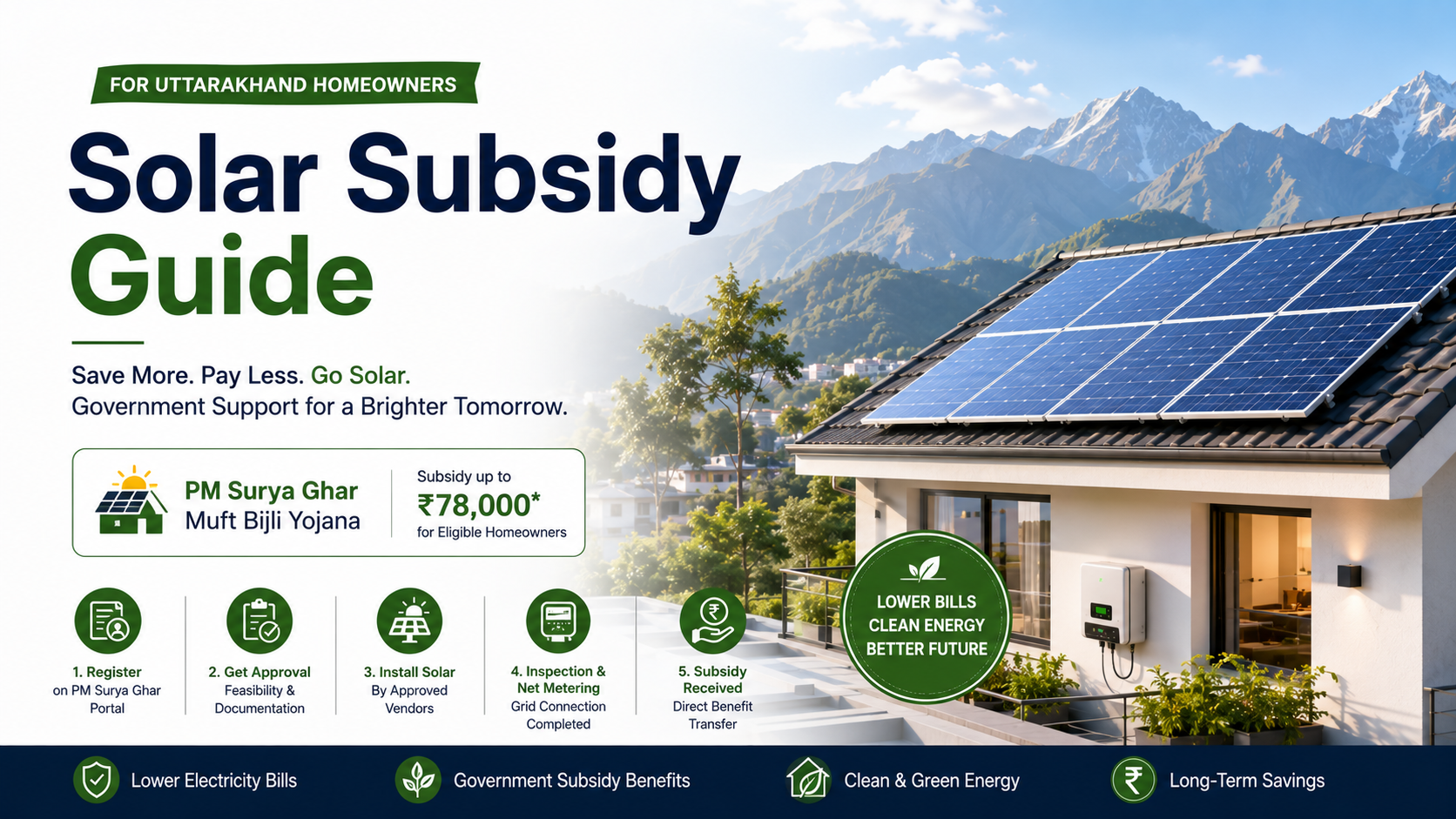
Homeowners across Uttarakhand can apply for rooftop solar subsidy benefits under the PM Surya Ghar Muft Bijli Yojana, provided they meet the eligibility requirements.
Whether you live in Dehradun, Haridwar, Rishikesh, Haldwani, Roorkee, Almora, Pithoragarh, or other parts of the state, residential rooftop solar installations can generally qualify under current government programs.
Because policies can evolve over time, it is always a good idea to verify the latest guidelines before beginning an installation.
Who Can Apply for Solar Subsidy?
In most cases, the subsidy is designed for residential homeowners installing eligible rooftop solar systems.
Applicants typically need a valid electricity connection and suitable rooftop space for installation.
Commercial properties, industrial facilities, and certain non-residential installations are generally covered under different policies and may not qualify for residential subsidy programs.
Understanding eligibility before installation helps avoid delays later in the process.
How the Subsidy Process Works
Many homeowners assume the application process is complicated.
In reality, it has become far more streamlined than it was a few years ago.
The process generally begins with registration through the official rooftop solar portal. After submitting the required details and obtaining necessary approvals, the solar system is installed and inspected.
Once verification is completed and the installation meets applicable requirements, the subsidy amount is transferred according to current program guidelines.
While timelines can vary depending on approvals and inspections, the overall process is designed to be straightforward for residential consumers.
Documents Commonly Required
Although requirements may vary slightly depending on current guidelines and electricity providers, homeowners are usually asked to provide basic identification and property-related documents.
These often include proof of identity, electricity connection details, bank account information, and documents related to property ownership.
Having these documents ready before starting the application process can help avoid unnecessary delays.
Understanding Solar Savings Beyond the Subsidy
While the subsidy is often the first thing homeowners focus on, it is only part of the financial picture.
The real value of a rooftop solar system comes from the electricity it generates over many years.
Every unit of solar power produced by your rooftop reduces the amount of electricity purchased from the grid.
As electricity prices continue to rise, those savings can become increasingly valuable.
This is why many homeowners view the subsidy as a helpful bonus rather than the primary reason to invest in solar.
Why Net Metering Matters
One of the biggest advantages of modern rooftop solar systems is net metering.
When your solar system generates more electricity than your home is currently consuming, the excess energy can be exported to the grid.
Instead of being wasted, those exported units are credited and can help offset future electricity consumption.
This means the electricity generated by your system continues creating value even when household demand is lower.
For many homeowners, net metering significantly improves the long-term economics of rooftop solar.
Is Solar Worth Installing Even After Subsidy Programs Change?
This is a question many homeowners ask.
While subsidies certainly improve affordability, solar remains attractive because of its long-term ability to reduce electricity expenses.
A quality rooftop solar system can continue generating electricity for decades.
Even if subsidy structures change in the future, homeowners still benefit from reduced electricity bills, net metering advantages, and greater energy independence.
The long-term value of solar extends far beyond any single government incentive.
Why More Uttarakhand Homeowners Are Switching to Solar
Several factors are driving solar adoption across the state.
Electricity costs continue to increase, rooftop solar technology has become more efficient, and awareness about renewable energy is growing.
Government support has accelerated adoption, but many homeowners are ultimately making the switch because they recognize the long-term financial and practical benefits.
As more rooftops across Uttarakhand begin generating their own electricity, solar is becoming less of an alternative technology and more of a mainstream home improvement.
Frequently Asked Questions
Is solar subsidy available in Uttarakhand?
Yes. Eligible residential homeowners can apply for rooftop solar subsidy benefits under current government programs.
Can I receive subsidy for a 5kW solar system?
In most cases, eligible residential rooftop installations can qualify for the maximum applicable subsidy under current guidelines.
How is the subsidy paid?
After installation, inspection, and verification are completed, the subsidy is generally transferred directly to the beneficiary according to current program procedures.
Does net metering affect subsidy eligibility?
Net metering and subsidy programs are separate aspects of a rooftop solar installation, although both contribute to overall savings.
Is solar still worth installing if subsidy policies change?
For many homeowners, yes. Long-term electricity savings, net metering benefits, and reduced dependence on grid power continue to provide value regardless of future policy changes.
Leave a Reply