
For many homeowners, rooftop solar starts with a simple goal—reducing electricity bills without spending more than necessary.
That’s one of the reasons 3kW solar systems have become so popular in Dehradun. They sit in a sweet spot where the installation cost remains relatively affordable while generating enough electricity for many small and medium-sized households.
If you’ve been researching solar, you’ve probably come across different prices online and wondered why the numbers vary so much. The reality is that there isn’t a single fixed cost for a 3kW solar system. The final price depends on the type of system, the quality of equipment used, rooftop conditions, and whether you’re eligible for government subsidy benefits.
Before looking at pricing, it helps to understand why so many homeowners choose this particular system size.
Why a 3kW Solar System Is So Popular
A 3kW solar system is often considered ideal for households with moderate electricity consumption.
For many families, it provides enough electricity generation to offset a significant portion of their monthly usage without requiring a large rooftop area or a major investment.
Homes that regularly use appliances such as refrigerators, washing machines, televisions, ceiling fans, water pumps, and occasional air conditioning often find a 3kW system to be a practical starting point.
It’s large enough to create meaningful savings while remaining within the budget range of many homeowners.
Understanding the Cost of a 3kW Solar System
One of the biggest misconceptions about solar pricing is that every installation costs the same.
In reality, pricing varies depending on factors such as:
- Solar panel technology
- Inverter quality
- Rooftop structure
- Installation complexity
- Type of solar system selected
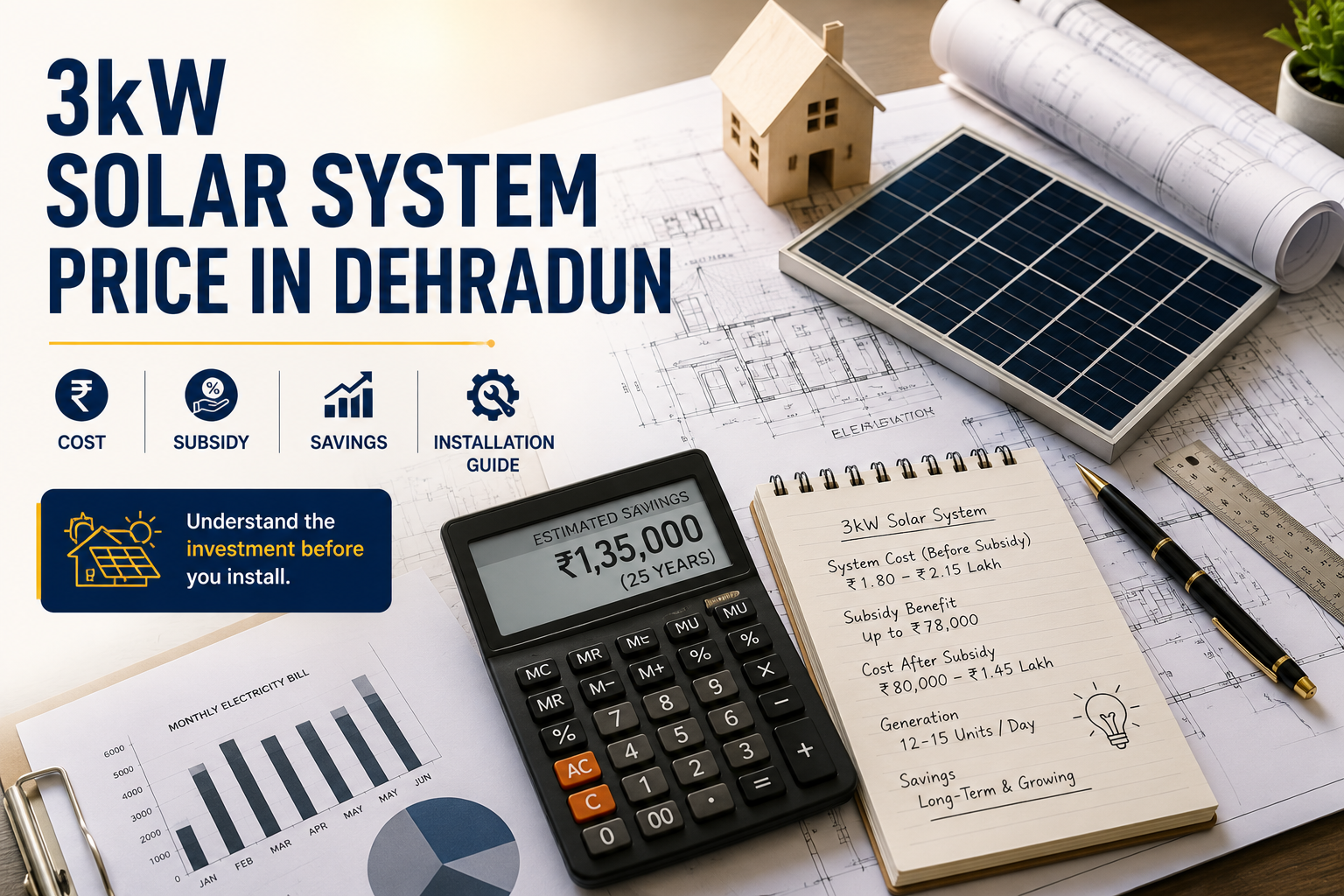
In Dehradun, a typical on-grid 3kW solar system generally costs between ₹1.8 lakh and ₹2.15 lakh before subsidy benefits.
Hybrid systems that include battery backup usually cost more because of the additional storage components, while off-grid systems can also require a larger investment depending on the battery capacity selected.
The most accurate way to determine pricing is through a rooftop assessment, as every property has slightly different requirements.
How Government Subsidies Affect the Price
One of the biggest reasons residential solar adoption has accelerated in recent years is the availability of government-supported subsidy programs.
Under current rooftop solar schemes, eligible homeowners can receive financial assistance that helps reduce the overall installation cost.
For many households, this significantly changes the economics of going solar.
A system that may initially appear expensive often becomes far more affordable once subsidy benefits are taken into account.
Because subsidy structures can change over time, it’s always a good idea to verify the latest guidelines before making a decision.
Looking Beyond the Installation Cost
While the purchase price naturally receives the most attention, it’s often more useful to think about solar in terms of long-term value.
A rooftop solar system doesn’t simply reduce electricity bills for a few months. It continues generating electricity year after year.
In Dehradun’s climate, a properly installed 3kW system can typically generate between 12 and 15 units of electricity per day under normal operating conditions.
Over the course of a year, that can translate into thousands of units of electricity produced directly from your rooftop.
For many homeowners, the long-term savings eventually exceed the original installation cost several times over.
How Much Roof Space Will You Need?
One of the practical considerations homeowners often overlook is available roof space.
Fortunately, a 3kW solar system doesn’t require a particularly large rooftop.
In most cases, approximately 250 to 300 square feet of shadow-free roof area is sufficient.
The exact requirement depends on factors such as panel efficiency, roof design, and installation layout.
A site survey is usually the easiest way to determine whether your rooftop can comfortably accommodate the system.
Why On-Grid Systems Are Often the Preferred Choice
For most urban households in Dehradun, on-grid solar systems remain the most popular option.
Because they stay connected to the electricity network, there is no need for expensive battery storage.
This helps keep installation costs lower while allowing homeowners to benefit from net metering.
Hybrid systems provide battery backup during power outages, while off-grid systems operate independently from the electricity grid altogether.
Each option has its advantages, but for many residential properties, an on-grid setup provides the best balance between affordability and long-term returns.
The Role of Net Metering in Maximizing Savings
One of the features that makes rooftop solar particularly attractive is net metering.
When your solar system produces more electricity than your home is using, the excess power is exported back to the grid.
Instead of losing that energy, you receive credits that help offset future electricity consumption.
This means the electricity generated during sunny daytime hours continues to provide value even when your household demand is lower.
For many homeowners, net metering plays an important role in improving the overall return on their solar investment.
Is a 3kW Solar System the Right Choice for Your Home?
The answer depends largely on your electricity consumption habits.
A 3kW system is often an excellent fit for households consuming roughly 300 to 450 units of electricity per month.
However, every home is different.
The number of family members, appliance usage, future energy requirements, and available roof space all influence the ideal system size.
That’s why reviewing your electricity bills and understanding your consumption patterns is usually more valuable than simply choosing a system based on price alone.
Frequently Asked Questions
How many units can a 3kW solar system generate daily?
Under normal conditions, a 3kW system can typically generate around 12–15 units of electricity per day.
How much roof space is required?
Most installations require approximately 250–300 square feet of shadow-free rooftop space.
Is subsidy available on a 3kW solar system?
Eligible residential consumers can benefit from government-supported rooftop solar subsidy programs, subject to prevailing guidelines.
Is a 3kW system enough for a family home?
For many households consuming around 300–450 units per month, a 3kW system is often sufficient.
How long does a rooftop solar system last?
Most modern solar panels are designed to operate effectively for 25 years or more.
For homeowners looking to reduce electricity expenses without investing in a very large solar installation, a 3kW system often represents a practical middle ground. It offers a balance between affordability, energy generation, and long-term savings, making it one of the most popular residential solar choices across Dehradun today.
Leave a Reply