
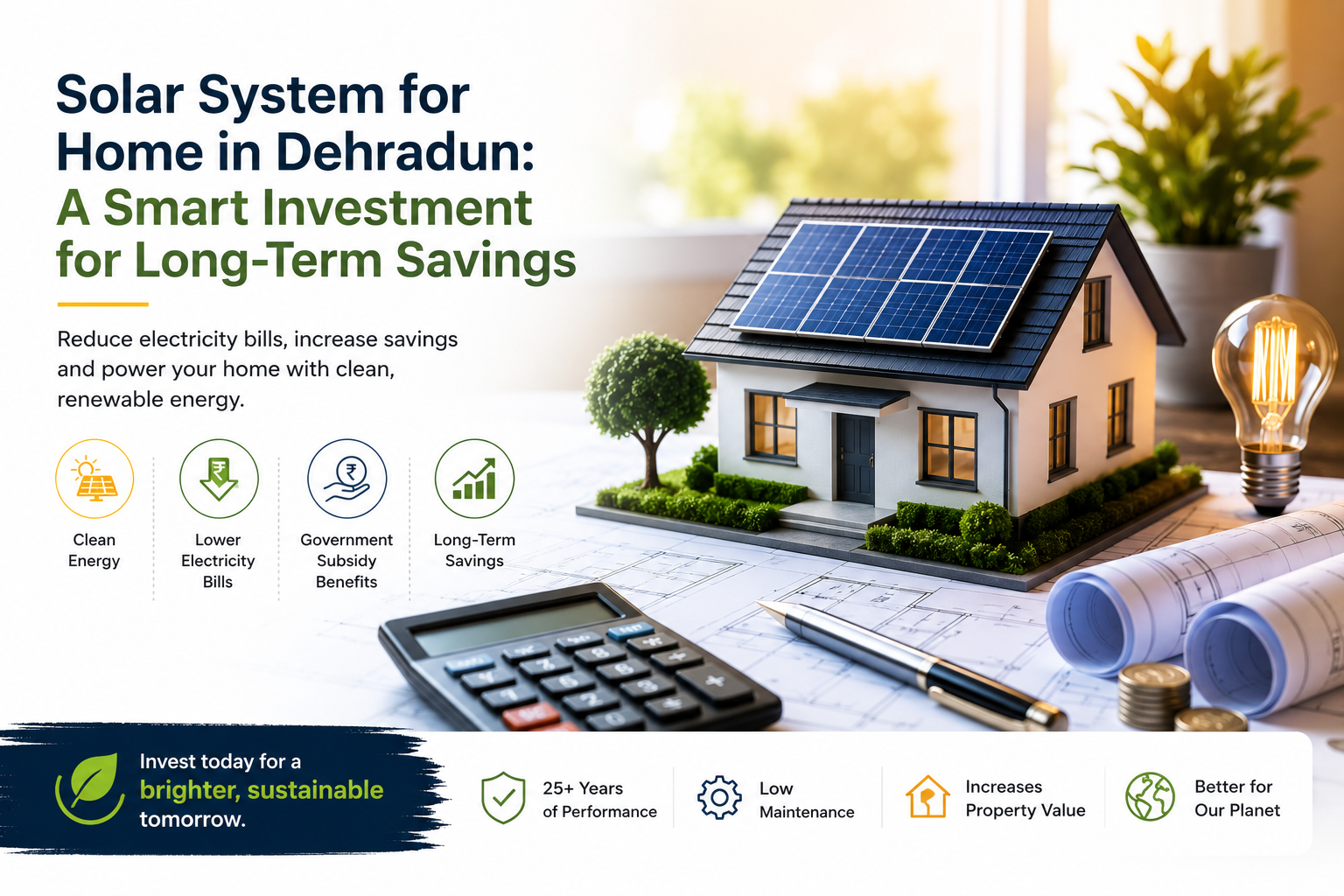
A few years ago, most homeowners looked at solar panels as something expensive or meant only for large buildings and commercial projects. Today, that perception is changing rapidly.
Across Dehradun, more families are installing rooftop solar systems not just because they want clean energy, but because they want lower electricity bills and greater control over their monthly expenses.
With electricity costs continuing to rise and government support making solar more affordable than ever, many homeowners are now viewing solar as a long-term investment rather than an additional expense.
The idea is simple. Your rooftop receives sunlight every day. Instead of letting that space sit unused, a solar system allows you to convert that sunlight into electricity that can power your home for years to come.
Why Solar Is Becoming Popular Among Homeowners
The growing interest in residential solar isn’t difficult to understand.
Most households today use significantly more electricity than they did a decade ago. Air conditioners, refrigerators, washing machines, water heaters, work-from-home setups, and multiple electronic devices all contribute to higher monthly consumption.
While electricity usage has increased, solar technology has also become more efficient and accessible.
As a result, many homeowners are finding that installing a rooftop solar system can help reduce their dependence on grid electricity while providing noticeable savings over the long term.
Unlike many home improvements that offer only convenience or aesthetic value, a solar system continues generating financial benefits long after installation.
Turning Sunlight Into Electricity
One of the reasons solar has become so widely adopted is its simplicity.
Solar panels installed on the rooftop absorb sunlight throughout the day and convert it into electricity. This electricity passes through an inverter, which transforms it into a form that can be used by household appliances.
During daylight hours, the electricity generated by the solar system powers your home directly. When production exceeds consumption, the excess energy can be sent back to the electricity grid through net metering.
The process happens automatically, requiring very little involvement from the homeowner.
Once installed, a properly designed solar system quietly works in the background, generating electricity whenever sunlight is available.
Choosing the Right System for Your Home
Not every household has the same energy requirements.
A small family living in a compact home will naturally consume less electricity than a larger household running multiple air conditioners and high-power appliances.
This is why solar systems are designed in different capacities.
Smaller homes often benefit from systems between 1kW and 3kW, while households with higher electricity consumption may find 5kW systems or larger more suitable.
The best way to determine the ideal size is by reviewing actual electricity usage rather than simply estimating based on the size of the property.
A system that is properly matched to your consumption patterns will usually provide better value and more efficient long-term savings.
Understanding the Role of Roof Space
One factor that often surprises homeowners is how little roof space is actually required for many residential solar systems.
A typical 3kW system generally requires around 250 to 300 square feet of shadow-free rooftop area, while a 5kW system usually needs approximately 400 to 500 square feet.
The exact requirement depends on panel efficiency, rooftop layout, and available sunlight.
In many cases, homeowners assume their roof isn’t suitable until a professional assessment shows otherwise.
Factors such as roof direction, shading from nearby buildings, and overall structural condition all play an important role in determining system performance.
The Savings Potential of Rooftop Solar
When people think about solar, they naturally focus on electricity bill savings.
While the exact amount varies from one household to another, a properly sized solar system can significantly reduce monthly electricity expenses.
For example, a 5kW rooftop solar system in Dehradun can typically generate around 18 to 22 units of electricity per day under normal conditions.
For households with moderate to high electricity usage, this can offset a substantial portion of their monthly consumption.
Over the lifespan of the system, the accumulated savings often exceed the original installation cost many times over.
This is one of the main reasons homeowners increasingly view solar as a financial investment rather than simply an energy upgrade.
Why On-Grid Solar Is the Preferred Choice
For most urban homes in Dehradun, on-grid solar systems have become the most popular option.
Unlike battery-based systems, on-grid installations remain connected to the electricity network. This keeps installation costs lower while allowing homeowners to benefit from net metering.
Because there are no batteries to maintain or replace, the overall system remains simpler and more cost-effective.
Hybrid and off-grid systems certainly have their place, particularly in areas with frequent power outages or limited grid access, but for most residential properties, an on-grid system offers the best balance of affordability and performance.
How Government Subsidies Have Made Solar More Affordable
One of the biggest reasons rooftop solar adoption has accelerated across India is the availability of government support programs.
Initiatives such as PM Surya Ghar Yojana help reduce the upfront investment required for residential solar installations.
For eligible homeowners, subsidy benefits can significantly lower installation costs and improve the overall return on investment.
Combined with long-term electricity savings, these incentives have made solar more accessible to households that may have previously considered it out of reach.
Looking Beyond Monthly Savings
While reducing electricity bills is often the primary motivation, many homeowners discover additional benefits after installing solar.
A rooftop solar system can increase property value, reduce dependence on rising electricity tariffs, and provide a greater sense of energy independence.
It also allows families to generate clean, renewable electricity directly from their own property.
As awareness grows and technology continues to improve, rooftop solar is becoming a normal part of modern homeownership rather than a niche upgrade.
Frequently Asked Questions
How long do residential solar panels last?
Most high-quality solar panels are designed to operate efficiently for 25 years or more.
Will solar panels work during cloudy weather?
Yes. Electricity generation continues during cloudy conditions, although production may be lower than on bright sunny days.
Can I install a solar system if my electricity bill is low?
Yes. Smaller solar systems can be designed for homes with lower electricity consumption.
Is government subsidy available for residential solar systems?
Eligible homeowners can benefit from government-supported programs, subject to current guidelines and eligibility criteria.
How much maintenance does a home solar system require?
Very little. Periodic cleaning and occasional inspections are usually sufficient to maintain performance.
For many homeowners in Dehradun, solar is no longer a future consideration—it’s becoming a practical way to manage rising energy costs. The right system depends on your electricity usage, rooftop conditions, and long-term goals, but one thing is becoming increasingly clear: a rooftop that generates electricity can provide value far beyond the space it occupies.
Leave a Reply