
A few years ago, rooftop solar was something most homeowners only read about.
Today, it’s becoming a common sight on homes across India.
Rising electricity bills, improving solar technology, and government support programs have encouraged more families to explore solar as a long-term solution for managing energy costs. What was once considered an alternative energy source is now viewed by many homeowners as a practical financial decision.
But the benefits of solar go beyond simply reducing electricity bills.
For many families, installing solar panels is about gaining greater control over future energy expenses, making better use of available rooftop space, and investing in something that continues delivering value for decades.
Lower Electricity Bills Month After Month
The most obvious benefit of solar is the reduction in electricity costs.
Every unit of electricity generated by your rooftop solar system is a unit you don’t need to purchase from the grid.
For households with moderate to high electricity consumption, this can lead to noticeable savings every month. As solar generation offsets more of your daily energy usage, dependence on traditional electricity sources decreases.
For many homeowners, this is the reason they first begin exploring solar.
A Long-Term Investment Rather Than an Expense
Most household purchases lose value over time.
Solar works differently.
A properly installed rooftop solar system continues generating electricity for decades. Even after recovering the initial installation cost, the system keeps producing electricity and reducing monthly bills.
This long lifespan is one of the reasons solar is often viewed as an investment rather than a typical home improvement project.
Protection Against Rising Electricity Costs
Electricity prices rarely stay the same.
As energy costs increase over the years, households become more exposed to rising monthly bills.
Solar helps reduce that dependence by allowing homeowners to generate a portion of their own electricity.
While no system completely eliminates every future cost, producing your own energy can provide a level of protection against long-term tariff increases.
Government Support Makes Solar More Accessible
Government initiatives have played a major role in making rooftop solar more affordable for homeowners.
Subsidy programs designed for residential installations help reduce the upfront investment required to switch to solar.
For many families, these incentives make the decision easier and improve the overall return on investment.
As awareness grows, more homeowners are discovering that solar is often more affordable than they initially expected.
Making Better Use of Unused Rooftop Space
Many rooftops remain unused for years.
Solar panels allow homeowners to turn that empty space into something productive.
Instead of simply covering the house, the roof becomes a source of electricity generation and long-term savings.
This ability to convert unused space into a valuable asset is one of the reasons rooftop solar continues to gain popularity.
Net Metering Adds Even More Value
Modern rooftop solar systems can do more than power a home during the day.
With net metering, excess electricity generated by the system can be exported to the grid.
In return, homeowners receive credits that help offset future electricity consumption.
This ensures that electricity generated during sunny hours continues providing value, even when household demand is lower.
For many homes, net metering plays an important role in maximizing overall savings.
Solar Panels Require Surprisingly Little Maintenance
One concern many homeowners have is maintenance.
The reality is that modern solar systems require relatively little attention.
Periodic cleaning and occasional inspections are usually enough to keep a system operating efficiently.
Because there are few moving parts involved, maintenance requirements are generally much lower than many people expect.
This makes solar an attractive option for homeowners looking for long-term benefits without constant upkeep.
A Positive Impact Beyond Financial Savings
While cost savings are often the primary motivation, environmental benefits also matter.
Solar energy generates electricity without producing direct emissions during operation.
Every unit of electricity generated by solar reduces reliance on conventional power sources and contributes to cleaner energy production.
For homeowners who want to reduce their environmental footprint, solar provides a practical way to do so without changing daily habits.
Increased Appeal for Future Buyers
Homes with solar installations are often viewed differently by potential buyers.
Lower operating costs, reduced electricity bills, and modern energy infrastructure can make a property more attractive in the future.
While every real estate market is different, energy-efficient features are becoming increasingly important to many homebuyers.
Greater Energy Independence
Generating your own electricity gives you more control over your household’s energy needs.
Instead of relying entirely on external electricity providers, your home produces a portion of its own power directly from sunlight.
Some homeowners choose hybrid or battery-based systems to increase that independence even further.
For many families, this additional level of control provides both financial and practical benefits.
Why More Homeowners Are Choosing Solar Today
The growing popularity of rooftop solar isn’t driven by a single factor.
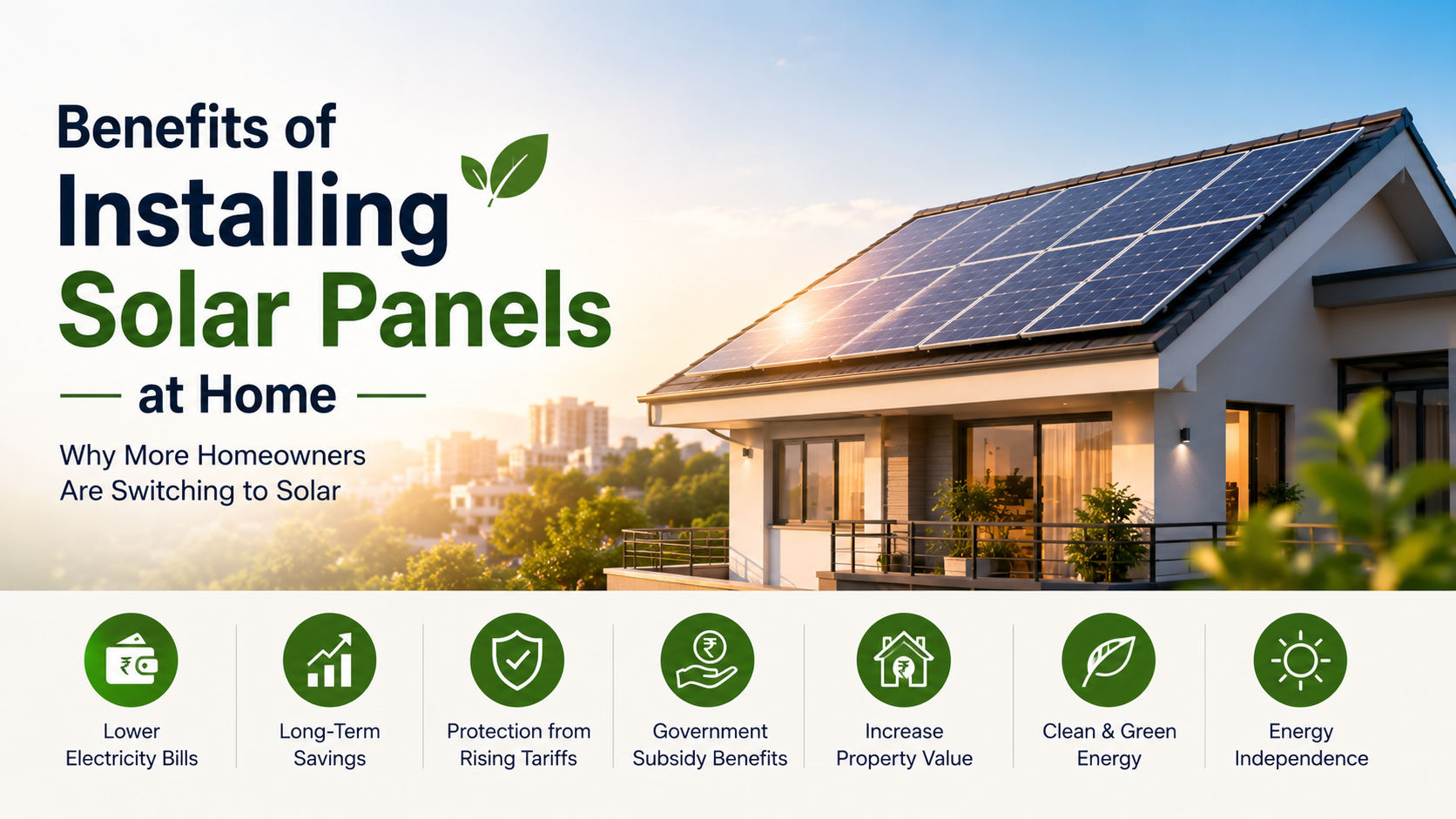
It’s the combination of lower electricity bills, long-term savings, government incentives, net metering benefits, and improved technology that makes solar increasingly attractive.
Modern systems are more efficient than ever, installation processes have become simpler, and homeowners now have access to better information than they did just a few years ago.
As a result, more families are viewing solar not as a luxury, but as a practical upgrade that continues creating value year after year.
Frequently Asked Questions
Are solar panels worth installing for homes?
For many homeowners, yes. Solar can reduce electricity bills, provide long-term savings, and increase energy independence.
How long do solar panels last?
Most quality solar panels are designed to operate efficiently for 25 years or more.
Do solar panels work during cloudy weather?
Yes. Solar panels continue generating electricity during cloudy conditions, although production is usually lower than on bright sunny days.
Is solar suitable for homes in Dehradun?
Yes. Dehradun receives favorable sunlight conditions throughout much of the year, making rooftop solar a practical option for many homeowners.
Do solar panels require a lot of maintenance?
No. Most systems require only periodic cleaning and routine inspections to maintain good performance.
Leave a Reply