

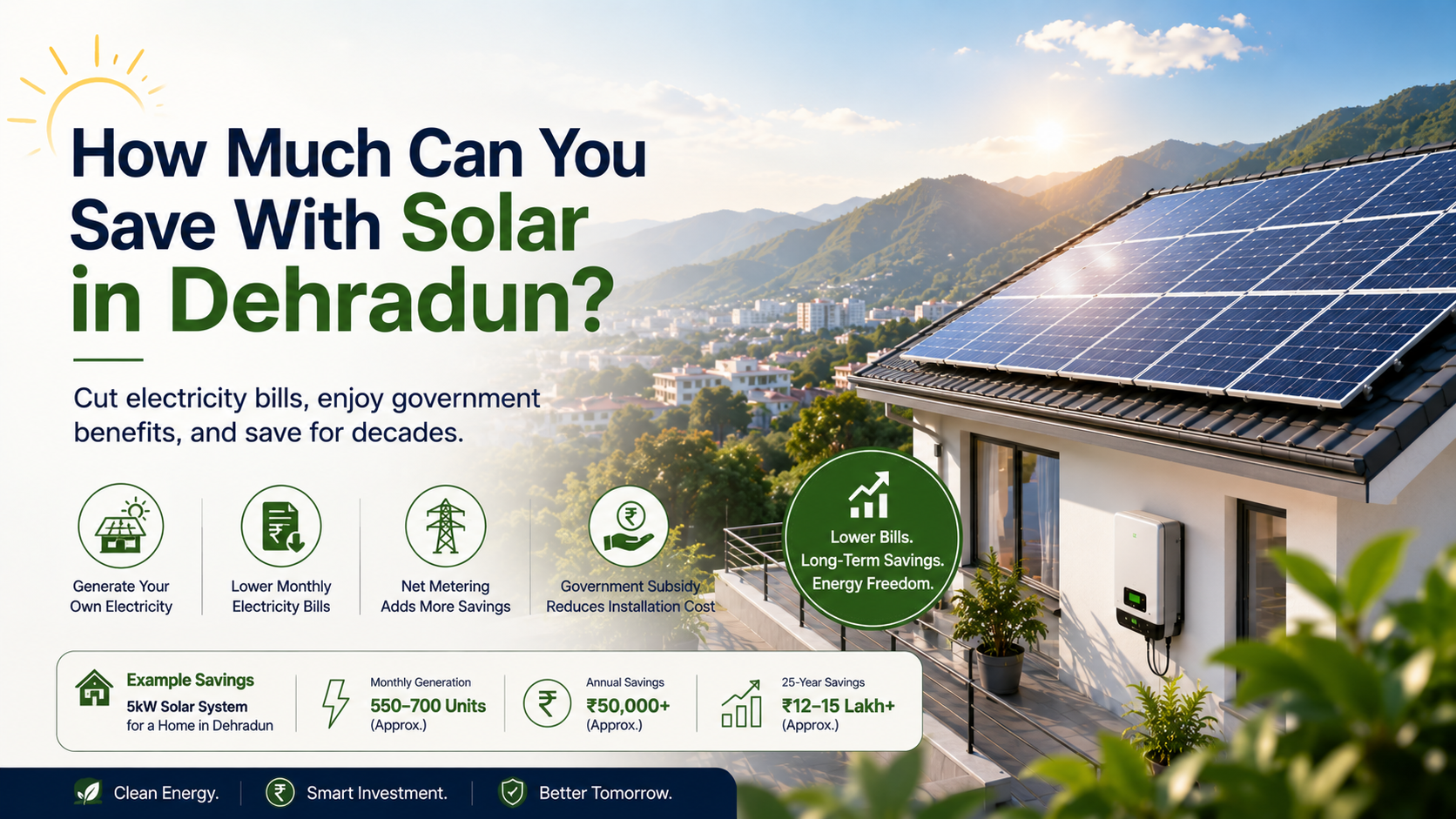
If you’re considering solar panels for your home, there’s a good chance you’re asking one question before anything else:
Will it actually save me money?
For most homeowners, that’s the deciding factor.
While clean energy and environmental benefits are certainly important, the real attraction of solar is the opportunity to reduce electricity bills and protect yourself from rising energy costs in the future.
Across Dehradun, more families are turning to rooftop solar because electricity prices continue to increase year after year. Instead of depending entirely on grid power, homeowners can now generate a large portion of their electricity directly from sunlight.
The result is lower monthly bills and long-term savings that continue for decades.
Where the Savings Come From
A rooftop solar system produces electricity throughout the day whenever sunlight is available.
That electricity is used to power your home before you draw power from the grid. The more solar energy your household uses, the fewer units you need to purchase from your electricity provider.
This is what creates the savings.
For households that consume a lot of electricity during the daytime, the financial benefits can be especially noticeable because more of their daily energy needs are covered directly by solar generation.
Over time, what may seem like a modest monthly reduction can turn into significant savings.
Why Solar Becomes More Valuable Every Year
Most investments don’t become more useful with age.
Solar is different.
As electricity tariffs increase, every unit generated by your solar system becomes more valuable because it replaces electricity that would otherwise cost more.
In simple terms, the solar panels installed on your roof today could be saving you even more money ten years from now than they are during their first year of operation.
This is one of the reasons many homeowners view solar as a long-term financial decision rather than just another household expense.
The Importance of Choosing the Right System Size
Not all homes consume electricity in the same way.
A small family with basic appliances will have very different energy requirements compared to a larger household running multiple air conditioners, water heaters, and other high-consumption equipment.
This is why there isn’t a one-size-fits-all solar system.
The amount you save depends largely on how closely the system matches your actual electricity usage.
A properly sized installation can offset a significant portion of your monthly consumption, helping maximize both savings and long-term returns.
How Net Metering Helps You Save More
One of the biggest advantages of modern rooftop solar systems is net metering.
During the day, your solar panels may sometimes produce more electricity than your home needs.
Instead of wasting that extra energy, it can be exported back to the grid.
In return, you receive credits that help reduce future electricity bills.
For many homeowners, net metering plays a major role in improving the overall value of their solar system and increasing savings over time.
Government Subsidies Improve the Return on Investment
Government support programs have made rooftop solar far more affordable than it was a few years ago.
Subsidies help reduce the upfront investment required to install a solar system, allowing homeowners to recover their costs sooner.
While the exact benefits depend on current guidelines and eligibility requirements, subsidy support continues to be one of the main reasons solar adoption is growing rapidly across India.
Combined with lower electricity bills and net metering benefits, these incentives can make solar an even more attractive investment.
Why Dehradun Is a Good City for Solar
Location plays an important role in solar performance.
Fortunately, Dehradun receives favorable sunlight conditions during most months of the year, allowing rooftop solar systems to generate electricity consistently.
Although production naturally varies with weather and seasonal conditions, homeowners generally have access to enough sunlight to achieve meaningful savings over the long term.
This is one of the reasons rooftop solar installations have become increasingly common across the city.
Looking Beyond the Monthly Electricity Bill
When evaluating solar, it’s easy to focus only on what happens next month.
A better approach is to think long term.
A quality solar system is designed to operate for decades. Over that lifespan, the electricity generated can be worth many times the original installation cost.
For many homeowners, solar becomes one of the few home improvements that continues delivering financial benefits year after year.
The value isn’t just in reducing today’s electricity bill. It’s in reducing thousands of future electricity bills as well.
What Determines How Much You Save?
Every property is different, which means savings will vary from one household to another.
Several factors influence overall performance, including electricity consumption, roof orientation, shading, panel quality, inverter efficiency, and regular maintenance.
Homes with higher electricity usage often see larger financial benefits because more expensive grid electricity is being replaced by solar generation.
This is why proper system design and installation are so important.
Is Solar Worth It for Homeowners in Dehradun?
For many households, the answer is yes.
Rising electricity prices, government incentives, net metering benefits, and favorable sunlight conditions have created a strong case for rooftop solar.
While the exact savings depend on your individual circumstances, a properly designed solar system can significantly reduce electricity expenses while continuing to generate value for decades.
For homeowners looking for a practical way to lower long-term energy costs, solar remains one of the most compelling investments available today.
Frequently Asked Questions
How much can solar reduce my electricity bill?
The exact amount depends on your electricity usage and system size, but a properly designed solar installation can offset a substantial portion of your monthly consumption.
Does net metering really increase savings?
Yes. Net metering allows homeowners to receive credit for excess electricity exported to the grid, improving overall financial returns.
How long does it take for solar to pay for itself?
The payback period varies based on system size, electricity tariffs, subsidy benefits, and consumption patterns, but many homeowners recover their investment within a few years.
Do solar panels work during cloudy weather?
Yes. Solar panels continue generating electricity during cloudy conditions, although production is generally lower than on bright sunny days.
Is solar a good investment in Dehradun?
For many homeowners, favorable sunlight conditions and rising electricity costs make rooftop solar one of the strongest long-term home investments available.
Leave a Reply