

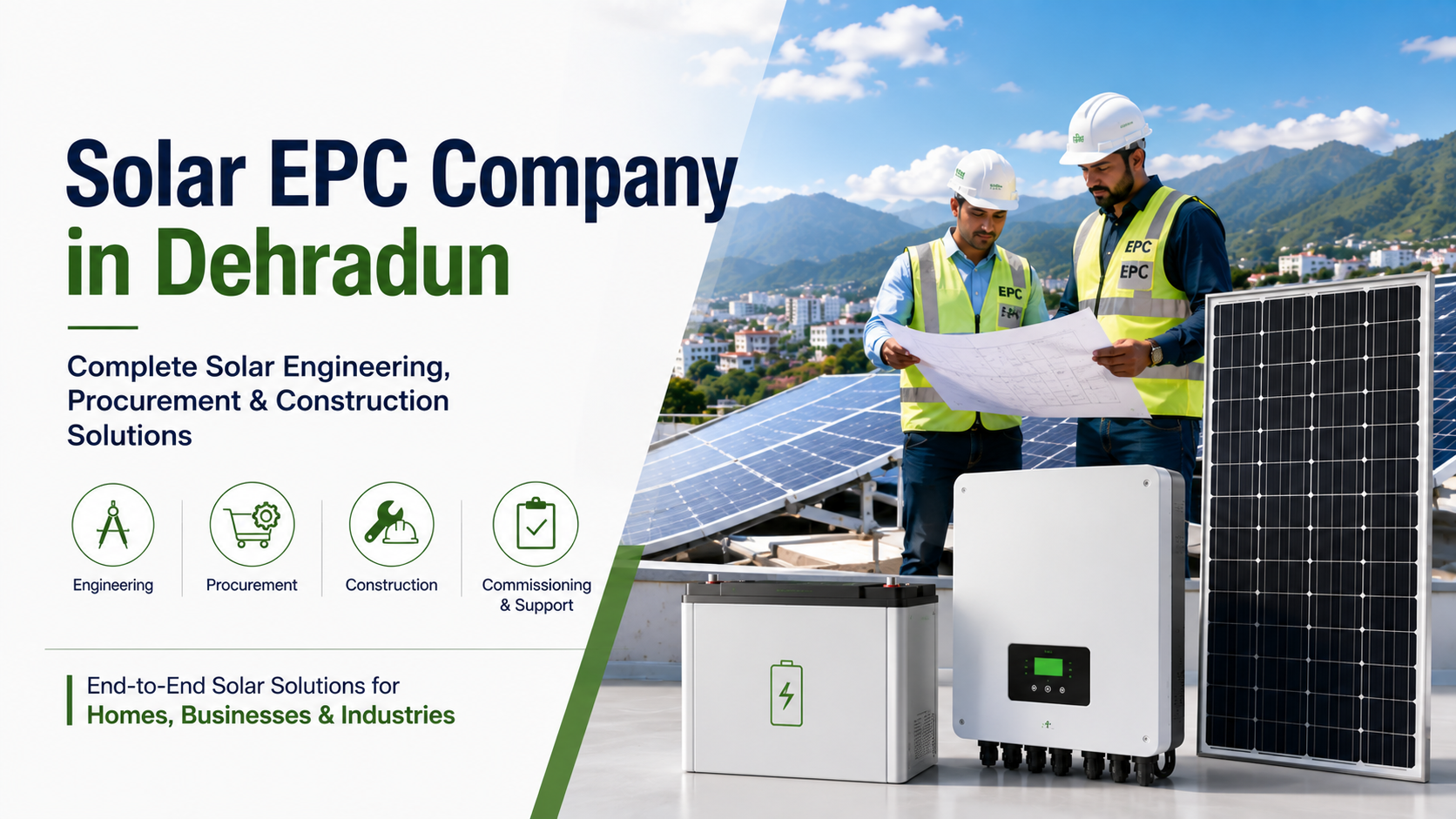
Installing a solar system is a big decision.
Whether it’s a rooftop system for your home, a commercial installation for your business, or a larger industrial project, there are many moving parts involved. From designing the system and selecting the right equipment to installation, approvals, and long-term support, every step plays a role in how well the project performs.
This is why many property owners choose to work with a Solar EPC company.
Instead of dealing with multiple suppliers, contractors, and service providers, an EPC company manages the entire project under one roof. The result is a smoother process, better coordination, and a system that is designed to perform efficiently for years to come.
What Is a Solar EPC Company?
The term EPC stands for Engineering, Procurement, and Construction.
In simple terms, a Solar EPC company is responsible for taking a solar project from the planning stage all the way to installation and commissioning.
Rather than sourcing equipment from one company, hiring installers from another, and coordinating technical work yourself, an EPC company brings everything together into a single process.
For homeowners and businesses, this often means fewer complications and greater accountability throughout the project.
Why Solar Projects Need More Than Just Solar Panels
When people think about solar, they usually focus on the panels installed on the roof.
In reality, a successful solar project involves much more than that.
The system must be carefully designed based on electricity consumption, rooftop conditions, structural considerations, sunlight availability, and future energy requirements.
The inverter, mounting structure, wiring, protection equipment, and installation quality all influence how efficiently the system performs.
Even the best solar panels can underperform if the overall system design is poor.
That’s why planning and engineering are such important parts of any solar project.
The Advantage of Working With One Team
One of the biggest benefits of the EPC approach is simplicity.
When multiple contractors are involved, responsibility often becomes unclear if something goes wrong.
One vendor may blame the equipment supplier, while another may point to installation issues.
Working with a single EPC company creates one point of responsibility for the entire project.
From the first site visit to the final system handover, everything is managed through a coordinated process.
For customers, this usually means fewer delays, clearer communication, and a more organized experience.
How a Typical Solar Project Begins
Every successful solar installation starts with understanding the property’s energy requirements.
Before recommending a system, a professional assessment is usually carried out to evaluate electricity consumption, available installation space, roof conditions, and sunlight exposure.
This information helps determine the most suitable system size and layout.
The goal is not simply to install as many panels as possible but to design a system that delivers the best balance between performance, savings, and long-term reliability.
Designing a System for Long-Term Performance
Solar is a long-term investment, which means system design matters just as much as equipment quality.
A well-designed system considers factors such as panel placement, inverter selection, cable routing, safety measures, and future maintenance access.
Small design decisions made during the planning stage can have a noticeable impact on electricity generation over the next twenty-five years.
This is one of the reasons professional engineering plays such an important role in solar projects.
Residential, Commercial, and Industrial Solar Projects
Not every solar project has the same requirements.
A residential rooftop installation is usually focused on reducing household electricity bills and maximizing available roof space.
Commercial properties often require larger systems designed to reduce operational expenses and improve energy efficiency.
Industrial facilities may have significantly higher power demands and require more advanced planning, electrical integration, and performance monitoring.
Because every project is different, the best systems are always designed around actual energy requirements rather than standard packages.
Equipment Selection Is Only Part of the Process
Many buyers spend a lot of time comparing solar panel brands.
While equipment quality is certainly important, the overall performance of a solar system depends on how all components work together.
Solar panels, inverters, mounting structures, protection devices, and monitoring systems each play an important role.
A balanced system using quality components typically delivers better long-term results than focusing on a single product alone.
Net Metering and Government Support
For many homeowners, solar becomes even more attractive because of net metering and available government incentives.
Net metering allows excess electricity generated during the day to be exported to the grid, helping homeowners receive additional value from their solar system.
Government subsidy programs have also helped reduce installation costs for eligible residential consumers, making rooftop solar more accessible than ever before.
Together, these benefits have encouraged more property owners across Uttarakhand to invest in solar energy.
Choosing the Right Solar EPC Company
Selecting a solar partner is about more than comparing quotations.
Experience, technical expertise, project management capabilities, equipment quality, and long-term support all contribute to the success of a solar installation.
A good EPC company should be able to understand your energy requirements, explain the process clearly, design a suitable system, and provide support even after the installation is complete.
After all, solar isn’t just about installing panels on a roof.
It’s about creating a system that continues generating value year after year.
Frequently Asked Questions
What does EPC mean in solar?
EPC stands for Engineering, Procurement, and Construction. It refers to a company that manages the complete solar project from planning and design to installation and commissioning.
Why should I choose an EPC company?
An EPC company simplifies the process by handling all stages of the project through a single team, improving coordination and accountability.
Can EPC companies handle residential and commercial projects?
Yes. Most EPC companies work on residential, commercial, industrial, and large-scale solar projects.
Is system design really that important?
Absolutely. Proper design directly affects electricity generation, system reliability, safety, and long-term performance.
Do EPC companies help with net metering?
Many EPC providers assist customers with net metering guidance and related approval processes as part of the overall project.
Leave a Reply