
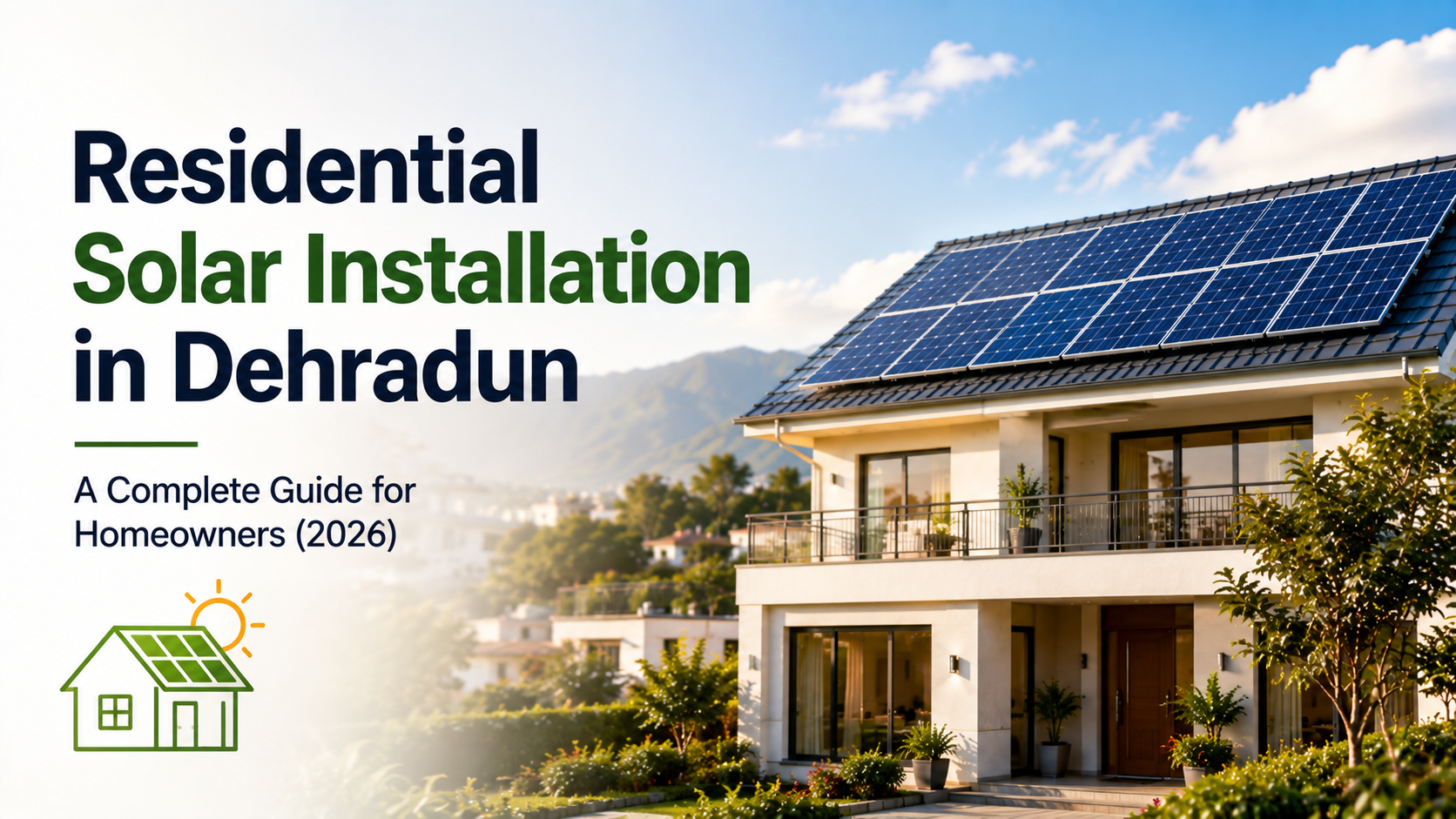
Residential Solar Installation in Dehradun: A Homeowner’s Guide to Going Solar
For many homeowners, electricity has become one of the largest recurring household expenses.
Air conditioners, refrigerators, water heaters, home offices, and everyday appliances all contribute to rising monthly electricity bills. As energy costs continue to increase, more families in Dehradun are looking for practical ways to reduce long-term expenses without compromising comfort.
This is one of the reasons rooftop solar has become increasingly popular.
A residential solar system allows homeowners to generate their own electricity using sunlight, reducing dependence on grid power while creating long-term savings. What was once considered a premium upgrade is now becoming a common feature on homes across the city.
Why More Homeowners Are Choosing Solar
The appeal of solar goes far beyond lower electricity bills.
Homeowners are increasingly viewing solar as a long-term investment rather than a household expense.
A properly designed solar system can generate electricity for decades, helping reduce monthly energy costs while providing greater protection against future electricity price increases.
Many homeowners also appreciate the environmental benefits of solar energy, as it allows them to generate clean electricity without changing their daily lifestyle.
Combined with government incentives and net metering benefits, solar has become more accessible than ever before.
How a Residential Solar System Works
The concept behind solar is surprisingly simple.
Solar panels installed on your rooftop capture sunlight and convert it into electricity.
This electricity then passes through an inverter, which converts it into usable power for your home. During the day, the energy generated by the system can be used to operate appliances, lights, fans, air conditioners, and other household equipment.
If the system generates more electricity than your home is currently using, the excess energy can often be exported back to the grid through net metering.
This helps ensure that the electricity produced by your system continues creating value even when demand is lower.
Is Your Home Suitable for Solar?
Most residential properties can support solar installations, but every rooftop is different.
Factors such as available space, sunlight exposure, roof orientation, and shading all influence how much electricity a system can generate.
Trees, nearby buildings, water tanks, and other obstructions may affect performance if not considered during the planning stage.
A professional rooftop assessment is one of the most important parts of the installation process because it helps determine the most effective system design.
Choosing the Right Solar System Size
One of the most common questions homeowners ask is how much solar capacity they actually need.
The answer depends less on the size of the house and more on the amount of electricity the household consumes.
A family with modest electricity usage may require a relatively small system, while homes running multiple air conditioners and high-consumption appliances may benefit from a larger installation.
For many households, systems in the 3kW to 5kW range provide a good balance between electricity generation and investment.
Larger homes with higher energy requirements may choose bigger systems based on their consumption patterns.
The most important goal is to match the system size to actual electricity usage.
Modern Solar Technology Has Improved Significantly
Solar technology has evolved rapidly over the past few years.
Modern solar panels are more efficient than ever before, allowing homeowners to generate more electricity using less rooftop space.
Advances in panel design, inverter technology, and system monitoring have also improved overall performance and reliability.
This means homeowners today can often achieve better results with fewer panels than would have been possible several years ago.
Understanding Net Metering
Net metering is one of the biggest reasons residential solar systems have become so attractive.
During sunny periods, your solar system may generate more electricity than your home requires.
Instead of allowing that energy to go unused, it can be exported to the electricity grid.
Those exported units are credited and can help offset future electricity consumption.
For many homeowners, net metering plays a significant role in improving long-term savings and increasing the overall value of a solar installation.
Government Subsidies for Homeowners
Government support programs have made solar more affordable for residential consumers.
Eligible homeowners can receive financial assistance through rooftop solar subsidy programs, helping reduce the initial installation cost.
These incentives have encouraged many families to consider solar earlier than they otherwise might have.
Because policies can change over time, it’s always a good idea to review the latest guidelines before beginning a project.
How Much Can You Save?
The exact savings depend on factors such as electricity consumption, system size, sunlight availability, and local electricity tariffs.
However, most homeowners experience noticeable reductions in monthly electricity bills after installation.
Over the life of the system, those savings can become substantial.
This is one of the reasons many people view solar as a long-term investment rather than a short-term expense.
The electricity generated over decades can often be worth many times the original installation cost.
What to Look for Before Installing Solar
Before moving forward with a solar project, it’s worth paying attention to a few key factors.
Equipment quality matters, but so does installation quality.
The right system design, proper rooftop assessment, inverter selection, warranty coverage, and after-sales support can all influence long-term performance.
Choosing the lowest quotation is not always the best decision if it means compromising on reliability or support.
Solar is a long-term investment, and the goal should be long-term value rather than short-term savings.
Is Residential Solar Worth It in Dehradun?
For many homeowners, the answer is yes.
Good sunlight availability, rising electricity prices, government incentives, and net metering benefits have made rooftop solar one of the most practical home upgrades available today.
Every property is different, and actual results depend on system design and energy consumption.
However, for homeowners looking to reduce electricity bills while making productive use of available rooftop space, solar continues to be a strong long-term investment.
Frequently Asked Questions
Is solar suitable for homes in Dehradun?
Yes. Dehradun receives favorable sunlight conditions for much of the year, making rooftop solar a practical option for many residential properties.
How long do solar panels last?
Most quality solar panels are designed to operate efficiently for 25 years or more.
What is the best solar system size for a home?
The ideal size depends on electricity consumption. For many households, systems in the 3kW to 5kW range are common choices.
Do solar panels work during cloudy weather?
Yes. Solar panels continue generating electricity during cloudy conditions, although production is generally lower than on bright sunny days.
Is net metering important?
Yes. Net metering helps homeowners receive value for excess electricity generated by their solar system, improving overall savings.
Leave a Reply