
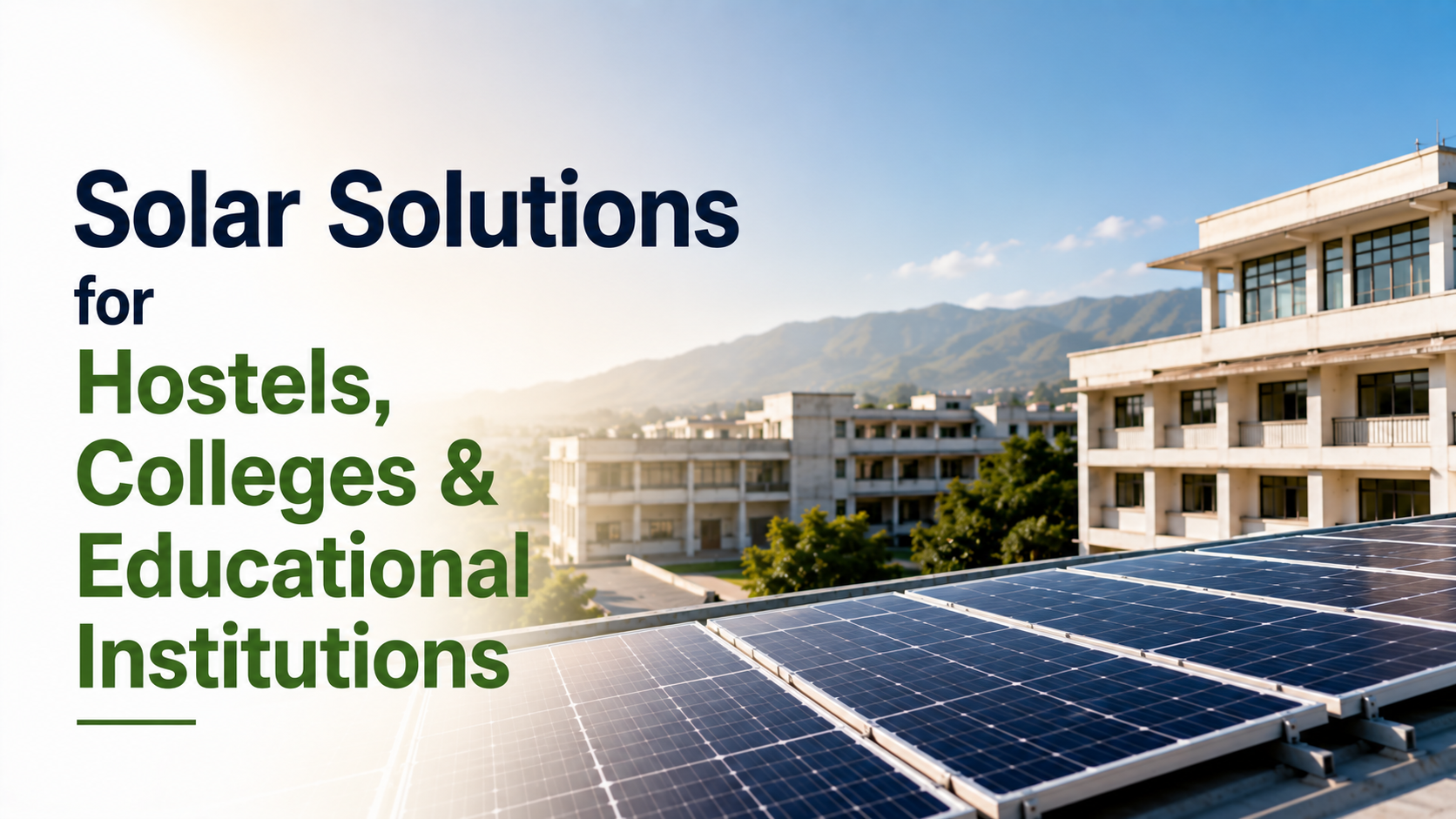
Educational institutions are among the largest consumers of electricity.
From classrooms and computer labs to hostels, libraries, cafeterias, and administrative buildings, electricity is used throughout the day to support students, staff, and daily operations. As energy costs continue to rise, many schools, colleges, universities, and hostel operators are looking for ways to reduce expenses without affecting the quality of services they provide.
This is where solar energy has become an increasingly attractive solution.
By generating electricity directly from sunlight, educational institutions can lower operating costs, reduce dependence on grid power, and create long-term financial savings while supporting sustainability goals.
Why Educational Institutions Are Ideal for Solar
Not every type of property benefits from solar in the same way.
Educational campuses and hostels are particularly well suited because they often have large rooftops and consistent daytime electricity consumption.
Classrooms, computer systems, lighting, Wi-Fi networks, water pumps, administrative offices, and hostel facilities all require electricity throughout the day—the same period when solar panels are generating power.
This natural alignment between energy generation and energy usage makes solar especially effective for educational institutions.
The Growing Cost of Electricity
For many institutions, electricity is one of the largest recurring operational expenses.
As campuses expand and student populations grow, electricity consumption often increases as well.
Hostels face additional demands from common-area lighting, water heating systems, laundry facilities, kitchen operations, and student accommodation services.
These costs continue year after year.
Solar helps institutions take greater control of these expenses by producing a portion of their electricity on-site.
How Solar Supports Long-Term Savings
One of the biggest advantages of solar is that it continues generating value long after installation.
While electricity bills rise over time, the sunlight reaching a rooftop remains free.
A properly designed solar system can generate electricity for decades, helping institutions reduce operating expenses year after year.
For educational organizations focused on long-term planning, this makes solar more than just an energy project—it becomes a financial strategy.
Money saved on electricity can often be redirected toward infrastructure improvements, student facilities, technology upgrades, and campus development.
Solar for Hostels and Student Accommodation
Hostels typically operate almost around the clock.
Lighting, fans, air conditioners, Wi-Fi systems, water pumps, geysers, and shared facilities all contribute to significant electricity consumption.
Because of these continuous energy requirements, hostel owners often see strong benefits from solar installations.
Many hostel rooftops also provide ample space for solar panels, allowing unused areas to become productive energy-generating assets.
For operators looking to improve profitability while controlling recurring expenses, solar can be a practical long-term solution.
Solar for Schools, Colleges, and Universities
Educational institutions often have multiple buildings with substantial rooftop space.
Classrooms, laboratories, libraries, administrative offices, and student facilities consume electricity throughout the day, creating an ideal environment for solar energy generation.
Beyond cost savings, solar installations can also reinforce sustainability initiatives and demonstrate a commitment to environmental responsibility.
Many institutions view solar as both an economic investment and a way to promote awareness of renewable energy among students.
Making Better Use of Campus Space
One of the most appealing aspects of rooftop solar is that it requires no additional land.
Many institutions already have large rooftops that receive direct sunlight for most of the day.
Instead of remaining unused, these rooftops can generate electricity and contribute to the campus’s energy requirements.
This allows institutions to create value from existing infrastructure without affecting daily operations.
Net Metering Adds Additional Value
Modern solar systems often benefit from net metering.
When a solar system generates more electricity than the institution is currently consuming, the excess energy can be exported back to the grid.
Those exported units can help offset future electricity consumption, increasing the overall financial return from the installation.
For institutions with varying energy demands throughout the day, net metering can significantly improve the value of a solar project.
Why Proper System Design Matters
Every educational institution has different energy requirements.
A small hostel will have different consumption patterns than a university campus or a large school.
This is why system design is so important.
The most effective solar projects are designed around actual electricity usage, available rooftop space, future expansion plans, and operational requirements.
The goal is not simply to install solar panels but to create a system that delivers reliable performance and meaningful savings for years to come.
Looking Beyond the Initial Investment
Many organizations initially focus on installation costs when evaluating solar.
However, the true value of solar lies in the electricity it generates over its lifespan.
A quality solar system is designed to operate for decades, producing electricity long after the original investment has been recovered.
For educational institutions with long-term planning horizons, this can make solar one of the most attractive infrastructure investments available.
Is Solar Worth It for Educational Institutions?
For many schools, colleges, universities, and hostels, the answer is yes.
Large rooftops, consistent daytime electricity consumption, rising energy costs, and net metering benefits all contribute to making solar a compelling solution.
Every institution has unique requirements, but the overall trend is clear: solar is helping educational organizations reduce operating expenses, improve sustainability, and create long-term financial value.
Frequently Asked Questions
Is solar suitable for hostels?
Yes. Hostels typically have high electricity consumption and large rooftops, making them strong candidates for solar energy.
Can schools and colleges install rooftop solar systems?
Yes. Educational institutions often have substantial rooftop space that can be used for solar power generation.
How long do solar panels last?
Most quality solar panels are designed to operate efficiently for 25 years or more.
Can solar reduce electricity bills for educational institutions?
Yes. A properly designed solar system can offset a significant portion of electricity consumption, leading to meaningful long-term savings.
Is net metering available for institutional solar projects?
Net metering policies vary, but where available, they can improve the financial benefits of a solar installation by allowing excess electricity to be exported to the grid.
Leave a Reply