
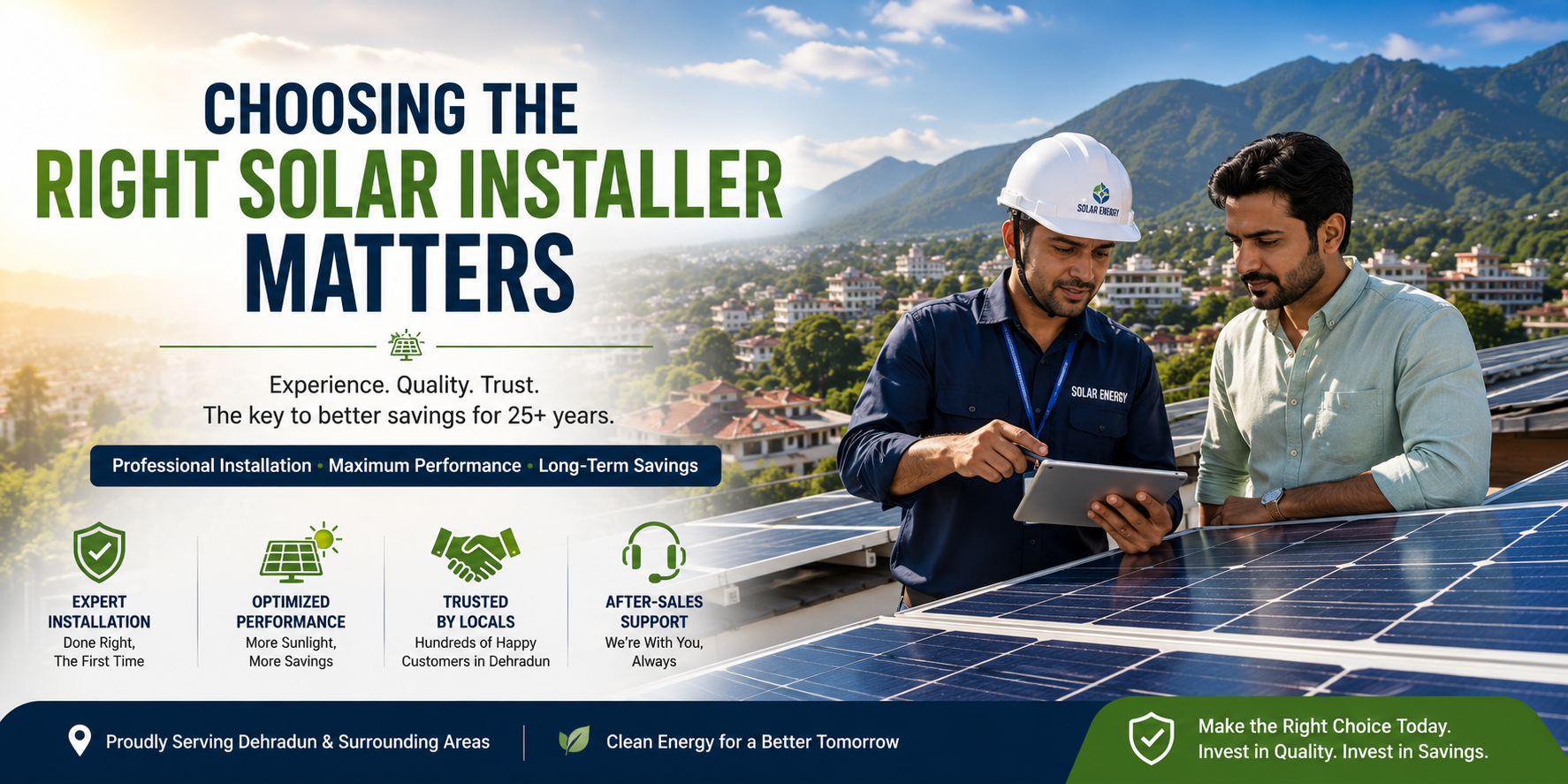
Installing solar panels is one of the biggest energy-related investments most homeowners will make. A well-designed solar system can help reduce electricity bills for 25 years or more, but the results depend on much more than just the solar panels themselves.
The company that designs and installs your system plays a major role in how much electricity it generates, how safely it operates, and how well it performs over the years.
That’s why choosing the right solar installer in Dehradun is just as important as choosing the right equipment.
Many people focus only on finding the lowest price, but factors such as system design, installation quality, net metering support, equipment selection, and after-sales service often have a much bigger impact on long-term savings.
Why the Installer Matters More Than Most People Realize
Imagine two homes installing the exact same solar panels.
One system consistently generates higher electricity output and delivers better savings, while the other struggles to perform as expected.
In many cases, the difference isn’t the panel brand. It’s the quality of the installation.
Problems such as poor panel placement, shading issues, improper wiring, weak mounting structures, or incorrect inverter sizing can affect the performance of a solar system for years.
A good installer doesn’t simply put panels on a roof. They design a system that is optimized for your property’s unique conditions.
What Should You Look for in a Solar Installer?
Before comparing prices, it’s worth evaluating a few important factors.
Experience and Technical Knowledge
Solar installation requires careful planning and technical expertise.
An experienced installer should be able to:
- Assess your rooftop properly
- Calculate the right system size
- Identify shading issues
- Recommend suitable equipment
- Optimize panel placement
- Follow proper safety standards
A professional site assessment is usually the first sign that a company takes system performance seriously.
Quality of Equipment
A solar system is made up of more than just solar panels.
Performance also depends on:
- Solar inverter
- Mounting structure
- Electrical wiring
- Safety equipment
- Monitoring systems
The cheapest quotation isn’t always the best value.
High-quality equipment often generates more electricity, requires less maintenance, and delivers better performance over the long term.
Proper Site Survey
A reputable installer should inspect your property before recommending a system.
During a site survey, factors such as:
- Roof size
- Roof orientation
- Available sunlight
- Shading conditions
- Electricity consumption
- Future energy requirements
are evaluated to determine the most suitable system.
Without a proper assessment, recommendations are often based on assumptions rather than actual site conditions.
Why Solar Adoption Is Growing Across Dehradun
Over the last few years, rooftop solar installations have become increasingly common throughout Dehradun.
Several factors are driving this growth:
- Rising electricity prices
- Government subsidy programs
- Greater awareness of renewable energy
- Improved solar technology
- Long-term cost savings
Many homeowners are realizing that their rooftops can generate electricity every day, helping reduce monthly bills while protecting against future tariff increases.
Businesses are also investing in solar as a way to lower operating costs and improve energy efficiency.
Residential Solar Installation
For homeowners, rooftop solar offers an opportunity to reduce monthly electricity expenses and gain greater control over energy costs.
Residential solar systems are commonly installed on:
- Independent houses
- Villas
- Farmhouses
- Residential societies
Before installing solar, most homeowners want answers to questions such as:
- What system size do I need?
- How much can I save?
- Do I qualify for a subsidy?
- Is my roof suitable?
- How does net metering work?
A good installer should be able to answer these questions clearly and provide realistic expectations based on your electricity usage.
Commercial Solar Installation
Commercial properties often have significant energy requirements and large rooftop areas, making them ideal candidates for solar power.
Common commercial applications include:
- Offices
- Hotels
- Schools
- Hospitals
- Warehouses
- Factories
- Retail buildings
Because electricity is often a major operating expense, many businesses see rooftop solar as a long-term investment that improves profitability over time.
Questions to Ask Before Hiring a Solar Company
Before finalizing any installer, consider asking a few important questions:
What system size do you recommend and why?
The answer should be based on your electricity consumption, not a generic recommendation.
Which type of system is best for my property?
Depending on your requirements, the recommendation may be:
- On-grid solar
- Hybrid solar
- Off-grid solar
What warranties are included?
A reliable installer should clearly explain equipment warranties and workmanship coverage.
Will you assist with subsidy applications?
Many homeowners need guidance understanding available subsidy programs and eligibility requirements.
Do you provide net metering support?
Net metering plays an important role in maximizing the value of a rooftop solar system.
A company that assists with documentation and approvals can make the process much smoother.
Signs You’re Working With a Reliable Solar Company
A trustworthy installer typically provides:
- Transparent pricing
- Detailed proposals
- Clear timelines
- Proper documentation
- Quality equipment
- Technical expertise
- Ongoing customer support
The focus should be on building a system that performs well for years rather than simply closing a sale.
While several solar companies operate across Dehradun, homeowners should compare experience, installation quality, equipment standards, and after-sales support before making a final decision.
Why Many Homeowners Start With a Site Survey
If you’re considering solar, the best first step is usually not choosing a panel brand or comparing quotations.
It’s understanding your property’s actual requirements.
A professional site assessment can reveal:
- How much electricity your roof can generate
- Which system size is appropriate
- Potential monthly savings
- Roof suitability
- Subsidy opportunities
- Net metering benefits
With that information, it becomes much easier to compare installers and make an informed decision.
Solar is a long-term investment, and the company you choose will have a direct impact on the performance of your system for years to come. Taking the time to evaluate experience, service quality, and technical expertise today can help ensure that your investment delivers the savings and reliability you’re expecting in the future.
Leave a Reply