

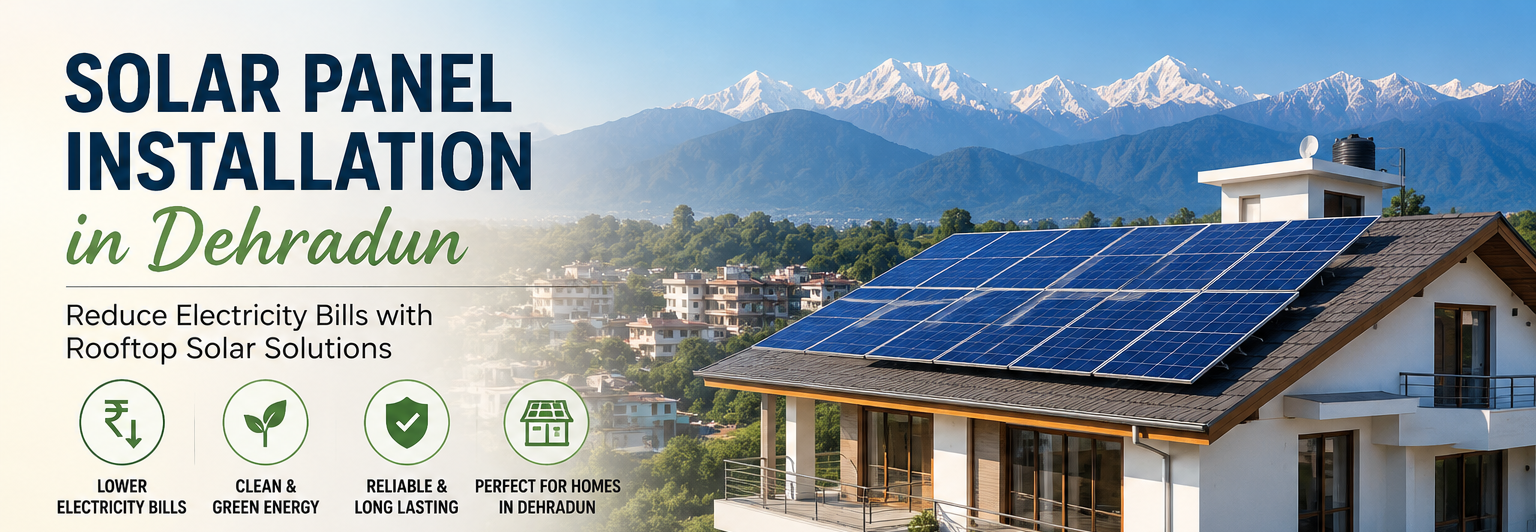
If you’ve looked at your electricity bill recently and thought, “There has to be a better way,” you’re not alone.
Across Dehradun, more homeowners are exploring rooftop solar as a way to reduce electricity costs and gain more control over their monthly expenses. Areas such as Sahastradhara Road, GMS Road, Rajpur Road, Prem Nagar, Ballupur, and Clement Town have seen a growing number of residential solar installations over the last few years.
The reason is simple. Once a solar system is installed, it starts generating electricity from sunlight every day, helping reduce dependence on grid power and lowering monthly bills.
But before investing in solar panels, most homeowners have similar questions:
- How much will a solar system cost?
- Will it work during the monsoon season?
- How much roof space is required?
- What subsidy is available?
- How much can I actually save every month?
This guide answers those questions and explains what to expect if you’re considering solar panel installation in Dehradun.
Why Solar Makes Sense in Dehradun
Dehradun enjoys good sunlight throughout most of the year, making it well suited for rooftop solar systems. Even during winter and cloudy days, solar panels continue producing electricity, although output may be lower than during peak summer months.
For most homeowners, the biggest benefit is lower electricity bills. Instead of buying all your power from the grid, your solar system generates a significant portion of the electricity your home uses during the day.
Other benefits include:
- Reduced monthly electricity expenses
- Government subsidy support for eligible systems
- Lower dependence on rising electricity tariffs
- Environment-friendly energy generation
- Minimal maintenance requirements
- Equipment lifespan of 25 years or more
For many families, solar is not just an environmental decision—it’s a financial one.
Understanding How a Rooftop Solar System Works
A rooftop solar system is made up of a few key components working together.
Solar panels capture sunlight and convert it into electricity. That electricity then passes through a solar inverter, which converts it into the type of power used by household appliances.
If your system is connected to the grid through net metering, any excess electricity generated during the day can be exported back to the electricity network. Depending on your consumption pattern, this can help offset future electricity bills.
The entire process happens automatically, with little day-to-day involvement from the homeowner.
Choosing the Right Solar System
The best solar system depends on your electricity consumption and whether you require backup power.
On-Grid Solar System
This is the most common choice for homes in Dehradun.
An on-grid system is connected directly to the electricity network and works alongside net metering. Because it doesn’t require batteries, it is usually the most cost-effective option.
Hybrid Solar System
A hybrid system combines solar generation with battery storage.
It allows you to store electricity for use during power cuts and offers greater energy independence.
Off-Grid Solar System
Off-grid systems operate without a grid connection and rely entirely on solar panels and batteries.
These systems are generally used in remote locations where grid power is unavailable or unreliable.
How Much Does Solar Installation Cost in Dehradun?
The cost of a rooftop solar system varies depending on several factors:
- System size
- Solar panel technology
- Inverter brand
- Roof structure
- Installation complexity
As a general guideline:
| System Size | Suitable For |
| 1 kW | Small homes |
| 3 kW | Small to medium families |
| 5 kW | Medium to large families |
| 10 kW | Large homes and commercial buildings |
Government subsidies can reduce the overall investment, making solar more affordable than many homeowners expect.
How Much Electricity Can Solar Generate?
One of the most common questions we hear is, “Will solar cover my entire electricity bill?”
The answer depends on your consumption and system size.
A properly installed 5 kW rooftop solar system in Dehradun can typically generate around 18–22 units of electricity per day under normal conditions. For many households, this can offset a significant portion of monthly electricity usage.
Actual generation depends on roof orientation, shading, weather conditions, and system quality.
How Much Roof Space Is Required?
Roof space is another factor homeowners often worry about.
Approximate requirements are:
- 1 kW: 80–100 sq. ft.
- 3 kW: 250–300 sq. ft.
- 5 kW: 400–500 sq. ft.
- 10 kW: 800–1000 sq. ft.
A site survey helps determine the most efficient panel layout and identifies any shading issues before installation.
Understanding Solar Subsidies and Net Metering
Government subsidy programs continue to encourage residential solar adoption across India.
While subsidy amounts and eligibility requirements may change over time, they can significantly reduce the upfront cost of installation.
Net metering adds another layer of savings. When your solar system generates more electricity than your home consumes, the surplus power is sent to the grid. In return, you receive credits that help reduce future electricity bills.
For many homeowners, net metering is what makes rooftop solar especially attractive.
Common Questions Homeowners Ask
Will solar panels work during monsoon season?
Yes. Output may be lower during heavily overcast days, but solar panels continue generating electricity whenever daylight is available.
How long do solar panels last?
Most quality solar panels are designed to operate efficiently for 25 years or longer.
Do solar panels require maintenance?
Very little. Occasional cleaning and periodic inspections are usually enough to keep a system performing efficiently.
Is solar worth it in Dehradun?
For most homeowners, yes. Good sunlight availability, government incentives, and rising electricity costs make solar one of the most practical long-term investments available today.
Every home has different energy needs, which is why there is no one-size-fits-all solar solution. Before choosing a system, it’s worth understanding your monthly electricity usage, available roof space, and long-term goals.
A properly designed solar installation can provide decades of savings, making it one of the few home improvements that continues to pay for itself year after year.
If you’re exploring solar panel installation in Dehradun and want to understand what system would work best for your property, a site assessment is usually the best first step.
Leave a Reply