

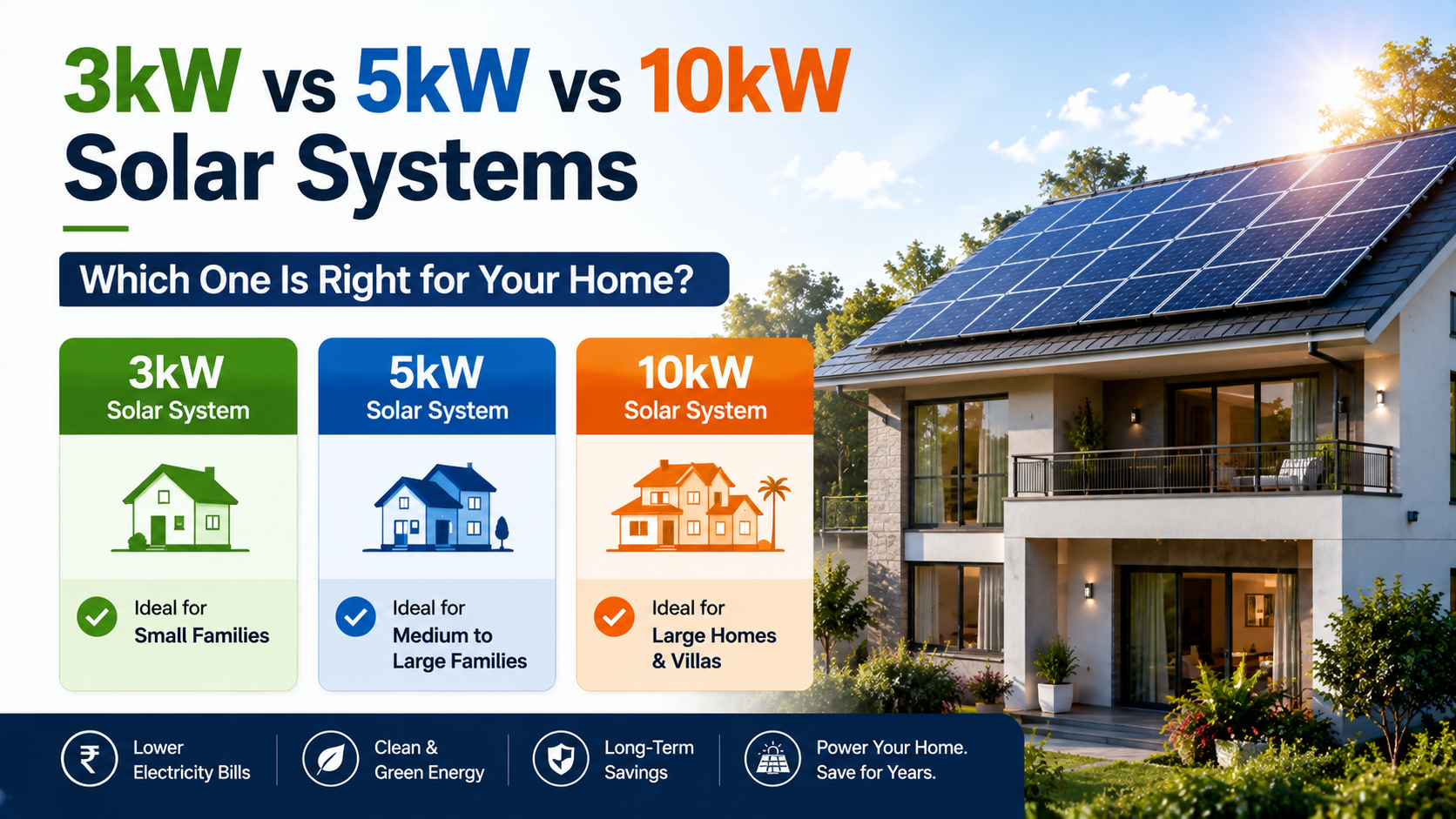
One of the first decisions homeowners face when planning a rooftop solar installation is choosing the right system size.
Should you install a 3kW system, invest in a 5kW setup, or go for a larger 10kW installation?
At first glance, the answer seems simple. A bigger system generates more electricity, so it must be better. But that’s not always true.
The best solar system isn’t necessarily the largest one. It’s the system that matches your electricity consumption, available rooftop space, budget, and future energy needs.
Understanding the differences between these system sizes can help you make a smarter investment and avoid paying for capacity you may never use.
Why Solar System Size Matters
Your solar system size determines how much electricity the system can generate.
A system that’s too small may not produce enough energy to significantly reduce your electricity bills.
On the other hand, a system that’s much larger than your actual requirements can increase your upfront investment without delivering proportional benefits.
This is why system sizing is one of the most important parts of solar planning.
The goal is to find the right balance between electricity generation and household consumption.
Is a 3kW Solar System Enough?
For many small and medium-sized households, a 3kW solar system can be an excellent starting point.
It is often suitable for families with moderate electricity usage, especially homes that primarily use standard household appliances such as fans, lights, televisions, refrigerators, and washing machines.
A 3kW system can help reduce a significant portion of monthly electricity consumption while keeping the initial investment relatively affordable.
For homeowners looking to take their first step into solar, this system size is often an attractive option.
However, households running multiple air conditioners or expecting substantial increases in electricity usage may eventually find a 3kW system limiting.
Why the 5kW Solar System Is So Popular
Among residential installations, the 5kW solar system is often considered the sweet spot.
It offers a strong balance between installation cost and electricity generation, making it suitable for many modern households.
Families using air conditioners, home office equipment, kitchen appliances, and other energy-consuming devices often find that a 5kW system aligns well with their daily electricity requirements.
Because it provides meaningful electricity generation without requiring excessive rooftop space, it has become one of the most commonly chosen solar system sizes for homeowners.
For many households, a 5kW system delivers the best combination of affordability, savings, and long-term flexibility.
When Does a 10kW Solar System Make Sense?
A 10kW solar system is designed for properties with much higher energy demands.
Large homes, villas, farmhouses, and properties with multiple air conditioners often require a larger system to offset their electricity consumption effectively.
Some homeowners also choose a 10kW installation because they are planning for future energy requirements.
Electric vehicle charging, additional appliances, home offices, and expanding family needs can all increase electricity usage over time.
For households with consistently high energy consumption, a larger system can provide substantial long-term savings.
However, it also requires more rooftop space and a higher initial investment.
Looking Beyond Today’s Electricity Usage
One mistake many homeowners make is sizing a solar system only for their current electricity bills.
While current consumption is important, it’s also worth considering future plans.
Will you be purchasing an electric vehicle?
Are you planning to install additional air conditioners?
Will family energy requirements increase over the next few years?
Thinking ahead can help ensure that your solar system continues meeting your needs long after installation.
In some cases, choosing a slightly larger system today may prove more cost-effective than upgrading later.
Which System Saves the Most Money?
Technically, larger systems can generate more electricity and therefore provide greater overall savings.
But that doesn’t automatically make them the best choice.
The most effective solar system is the one that closely matches your actual electricity consumption.
A homeowner using moderate amounts of electricity may achieve excellent results with a 3kW system.
A larger family may benefit more from a 5kW installation.
Homes with very high energy requirements may find that a 10kW system delivers the strongest long-term value.
The focus should always be on matching generation capacity with real-world usage rather than simply choosing the largest option available.
What About Government Subsidies?
Government support programs have made rooftop solar more affordable for homeowners across India.
Eligible residential consumers can receive subsidy benefits that help reduce the overall installation cost.
These incentives improve the financial attractiveness of solar and make it easier for homeowners to recover their investment.
Because subsidy structures can change over time, it’s always worth reviewing the latest guidelines before making a decision.
Which Solar System Is Right for Most Homes?
There is no universal answer because every household is different.
However, many homeowners find that a 5kW system offers the most balanced solution.
It provides strong electricity generation, supports modern household energy requirements, and offers excellent long-term savings potential.
A 3kW system remains a practical choice for smaller households with moderate consumption.
A 10kW system is often better suited for larger homes and properties with significantly higher electricity demands.
The best way to decide is by reviewing your electricity bills and understanding how your energy requirements may evolve in the future.
Frequently Asked Questions
Is a 3kW solar system enough for a family?
For many small and medium-sized families with moderate electricity consumption, a 3kW system can be sufficient.
Why is the 5kW solar system so popular?
A 5kW system offers an excellent balance between installation cost, electricity generation, and long-term savings, making it suitable for many households.
Is a 10kW system only for large homes?
Not necessarily. While large homes commonly choose 10kW systems, some homeowners install them to accommodate future energy needs such as electric vehicles and additional appliances.
Which system provides the best return on investment?
For many residential properties, a 5kW system often delivers one of the strongest combinations of affordability and savings.
Should I consider future electricity usage before installing solar?
Yes. Planning for future appliances, air conditioners, or electric vehicle charging can help ensure your solar system remains suitable for years to come.
Leave a Reply