
Installing solar panels is often the easy part.
Choosing the right type of solar system is where most homeowners become confused.
As soon as people start researching solar, they come across terms like on-grid, hybrid, and off-grid systems. While they all generate electricity using solar panels, they are designed for very different situations.
The right choice depends on factors such as your electricity usage, the reliability of the local power supply, whether you need backup during outages, and how much you’re willing to invest upfront.
Understanding how each system works can help you avoid spending money on features you may never use while ensuring you get the most value from your solar installation.
Why Choosing the Right System Matters
Many homeowners focus on panel quality and system size but pay less attention to the type of solar system being installed.
In reality, this decision can have a significant impact on installation cost, long-term savings, and how the system performs during power outages.
A homeowner living in an area with reliable electricity supply will often have different requirements from someone dealing with frequent power cuts or a property located far from the electricity grid.
This is why there is no single “best” solar system for everyone.
Understanding On-Grid Solar Systems
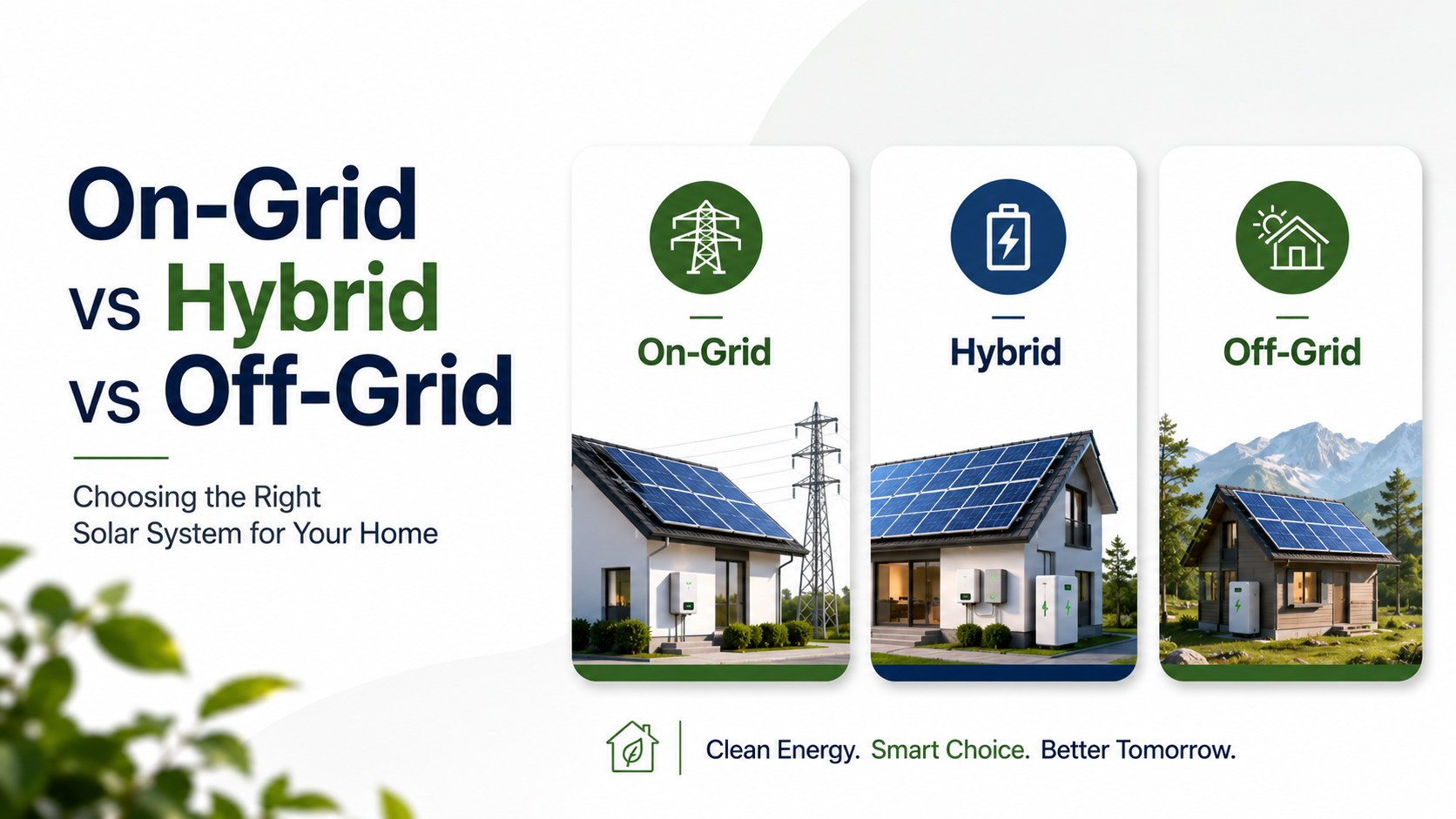
An on-grid solar system remains connected to the electricity network.
During the day, solar panels generate electricity for the home. If the system produces more electricity than the house is using, the excess energy can be exported back to the grid through net metering.
At night or whenever solar generation is insufficient, electricity is automatically drawn from the grid.
Because there are no batteries involved, on-grid systems are usually the most affordable option.
They are also among the most efficient from a financial perspective because they allow homeowners to take advantage of net metering while avoiding the additional cost of battery storage.
For most urban homes, on-grid systems remain the most popular choice.
Understanding Hybrid Solar Systems
A hybrid solar system combines solar generation with battery storage while still maintaining a connection to the electricity grid.
During normal operation, the home uses solar energy first. Excess electricity can either be stored in batteries or exported to the grid, depending on the system configuration.
The biggest advantage of a hybrid system becomes apparent during power outages.
Because energy is stored in batteries, selected appliances can continue operating even when grid electricity is unavailable.
This added convenience makes hybrid systems attractive for homeowners who experience frequent power cuts or want greater energy security.
The trade-off is a higher installation cost due to the inclusion of battery storage.
Understanding Off-Grid Solar Systems
An off-grid solar system operates independently of the electricity grid.
Every unit of electricity used by the property must be generated by the solar panels and stored in batteries when necessary.
Because there is no grid connection available as a backup, battery storage becomes a critical component of the system.
Off-grid installations are commonly used in remote locations where access to reliable grid electricity is limited or unavailable.
While they provide complete energy independence, they are also typically the most expensive option because of their larger battery requirements and more complex design.
For most urban homeowners, an off-grid system is usually unnecessary.
Comparing Cost and Long-Term Value
When comparing these systems, cost is often one of the biggest deciding factors.
On-grid systems generally have the lowest installation cost because they do not require batteries.
Hybrid systems require additional investment due to battery storage and related equipment.
Off-grid systems typically involve the highest upfront investment because they rely entirely on solar generation and battery capacity.
However, the cheapest system is not always the best choice.
The right option depends on how you use electricity and whether backup power is important for your household.
Which System Performs Best During Power Cuts?
This is one of the most important differences between the three options.
A standard on-grid solar system usually shuts down during a power outage for safety reasons.
Hybrid systems can continue powering selected appliances because they have battery storage available.
Off-grid systems are designed to operate independently and continue functioning regardless of grid conditions.
For homeowners who frequently experience power interruptions, this factor often plays a major role in the final decision.
Which Solar System Is Best for Homes in Dehradun?
For many residential properties in Dehradun, an on-grid system offers the best balance between affordability and long-term savings.
Reliable grid connectivity, net metering benefits, and lower installation costs make it an attractive option for most households.
A hybrid system may be worth considering if backup power is important or if your area experiences regular outages.
Off-grid systems are generally more suitable for remote locations, farmhouses, mountain properties, or areas where access to electricity is limited.
Thinking Beyond Today’s Electricity Needs
When choosing a solar system, it is also worth considering how your energy requirements might change over time.
A growing family, additional air conditioners, home office equipment, or even an electric vehicle can increase electricity consumption in the future.
Planning for these changes during the design stage can help ensure your solar investment continues meeting your needs for many years.
Making the Right Decision
The best solar system is not necessarily the most advanced or the most expensive.
It is the one that matches your lifestyle, electricity requirements, budget, and long-term goals.
For many homeowners, an on-grid system provides everything they need.
Others may find that battery backup offered by a hybrid system delivers greater peace of mind.
And for properties beyond the reach of reliable grid electricity, an off-grid system can provide complete energy independence.
Understanding these differences before installation helps ensure you invest in a solution that continues delivering value long after the panels are installed.
Frequently Asked Questions
Which solar system is the most affordable?
On-grid systems are usually the most affordable because they do not require battery storage.
Which solar system provides backup during power cuts?
Hybrid and off-grid systems can continue supplying power through battery storage.
Are on-grid systems eligible for net metering?
Yes. On-grid systems typically benefit from net metering arrangements where available.
Is an off-grid system suitable for city homes?
In most urban areas, an off-grid system is usually unnecessary because grid electricity is already available.
Which solar system is most commonly installed for homes?
For many residential properties, on-grid systems remain the most popular option due to their lower cost and strong long-term return on investment.
Leave a Reply