

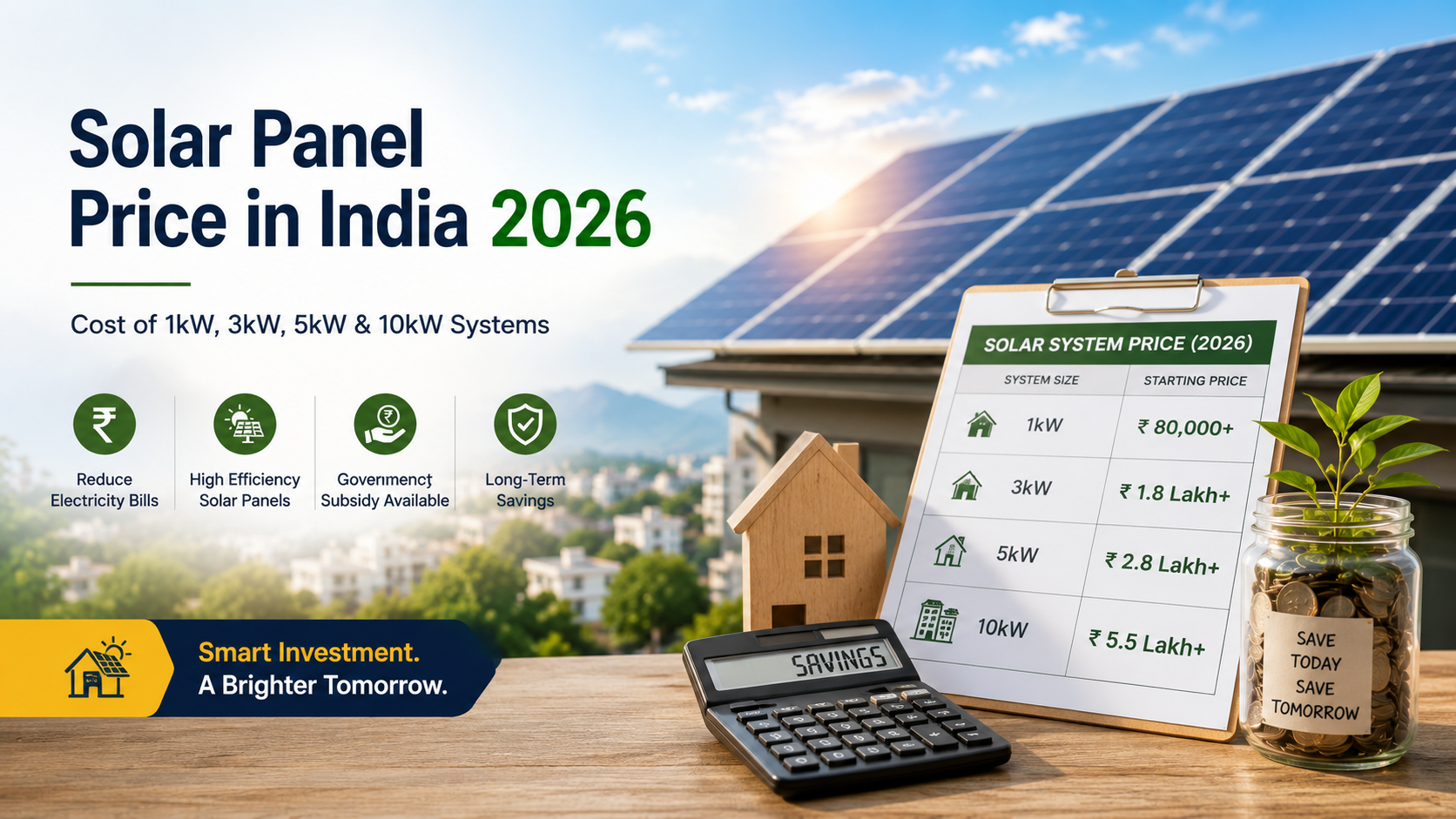
As electricity costs continue to rise across India, rooftop solar has become one of the most popular ways for homeowners to reduce long-term energy expenses.
Whether you’re considering a small residential system or a larger installation designed to cover most of your electricity consumption, one question always comes up first: how much does a solar system actually cost?
The answer depends on several factors, including system size, equipment quality, installation requirements, and available government subsidies.
While there is no single fixed price for every property, understanding how solar pricing works can help homeowners make better decisions and avoid choosing a system based on cost alone.
Why Solar Prices Can Vary So Much
One of the biggest misconceptions about rooftop solar is that every system of the same size costs the same.
In reality, pricing can vary significantly.
The quality of solar panels, inverter selection, mounting structures, installation complexity, and roof conditions all influence the final investment.
Two homeowners installing similar-sized systems may receive different quotations simply because their rooftops, energy requirements, or equipment preferences are different.
This is why it is often more useful to focus on value and expected performance rather than comparing prices alone.
Understanding Different Solar System Sizes
The size of a solar system is usually measured in kilowatts (kW).
Smaller systems are suitable for homes with modest electricity consumption, while larger systems are designed for households with higher energy requirements.
For many residential properties, systems in the 3kW and 5kW range remain the most popular choices because they provide a good balance between installation cost and electricity generation.
Larger homes, villas, and properties with significant electricity consumption often benefit from systems in the 8kW to 10kW range or higher.
The ideal size depends less on the physical size of the house and more on actual electricity usage.
Looking Beyond the Installation Cost
When evaluating solar prices, it is important to remember that a solar system is not simply another household purchase.
Unlike appliances or furniture, a rooftop solar installation continues generating value every day sunlight is available.
Over time, the electricity produced by the system offsets electricity that would otherwise have been purchased from the grid.
For many homeowners, the long-term savings generated over twenty-five years can significantly exceed the original installation cost.
This is one of the reasons solar is increasingly viewed as an investment rather than an expense.
How Government Subsidies Affect Pricing
Government support programs have played a major role in making rooftop solar more accessible.
Residential consumers may be eligible for subsidy benefits under national rooftop solar initiatives, helping reduce the upfront investment required for installation.
While subsidy structures can change over time, these programs have helped many homeowners make the transition to solar sooner than they otherwise might have.
Because policies and eligibility requirements can evolve, it is always worth checking the latest guidelines before making a decision.
What Determines the Final Cost of a Solar System?
Several factors influence the final installation price.
Solar panel technology is one of the most important considerations. Higher-efficiency panels often cost more initially but can generate more electricity while using less rooftop space.
The inverter also plays a significant role because it is responsible for converting the electricity generated by the panels into usable power for the home.
Roof conditions, structural requirements, installation complexity, and the type of solar system selected all contribute to the final cost as well.
On-grid systems are generally the most affordable option for urban homes, while hybrid and off-grid systems typically require additional equipment such as batteries.
Choosing the Right System Size
One mistake homeowners sometimes make is choosing a system purely based on price.
A smaller system may cost less initially, but it may not generate enough electricity to meet household requirements.
On the other hand, installing a much larger system than necessary may increase the upfront investment without providing proportional benefits.
The most effective approach is to select a system based on actual electricity consumption, available roof space, and future energy requirements.
This ensures a better balance between installation cost and long-term savings.
How Much Can Solar Actually Save?
The amount saved depends largely on electricity consumption and local tariff rates.
Homes with higher electricity bills often experience greater financial benefits because more grid electricity is being replaced by solar generation.
Over the lifespan of the system, savings can accumulate significantly, especially as electricity prices continue to increase.
This is one of the reasons rooftop solar remains attractive even when installation costs are considered.
The focus should not only be on what the system costs today, but also on how much electricity it can generate over the next two or three decades.
Why More Homeowners Are Installing Solar
The growth of rooftop solar across India is being driven by a combination of factors.
Electricity costs continue to rise, solar technology has become more efficient, government incentives remain available, and net metering allows homeowners to maximize the value of the electricity they generate.
At the same time, modern solar panels are designed to operate for decades with relatively low maintenance requirements.
For many households, solar has evolved from a niche technology into a practical financial decision.
Is Solar Worth the Investment?
For many homeowners, the answer is increasingly yes.
The exact return depends on factors such as system size, electricity consumption, sunlight availability, and installation quality.
However, when viewed over the long term, rooftop solar offers something few home upgrades can provide: the ability to generate measurable savings year after year.
Rather than focusing solely on the purchase price, many homeowners find it more useful to consider the long-term value the system will create over its lifetime.
Frequently Asked Questions
What is the average cost of a solar system in India?
The cost depends on system size, equipment quality, and installation requirements. Larger systems naturally require a higher investment than smaller residential installations.
Does subsidy reduce the cost of rooftop solar?
Yes. Eligible residential consumers may receive government subsidy benefits that help lower the overall installation cost.
Which solar system size is best for homes?
The ideal size depends on your monthly electricity consumption rather than the size of the property itself.
Are solar panels expensive to maintain?
No. Modern solar systems generally require minimal maintenance beyond periodic cleaning and routine inspections.
How long do solar panels last?
Most quality solar panels are designed to operate efficiently for 25 years or more.
Leave a Reply