

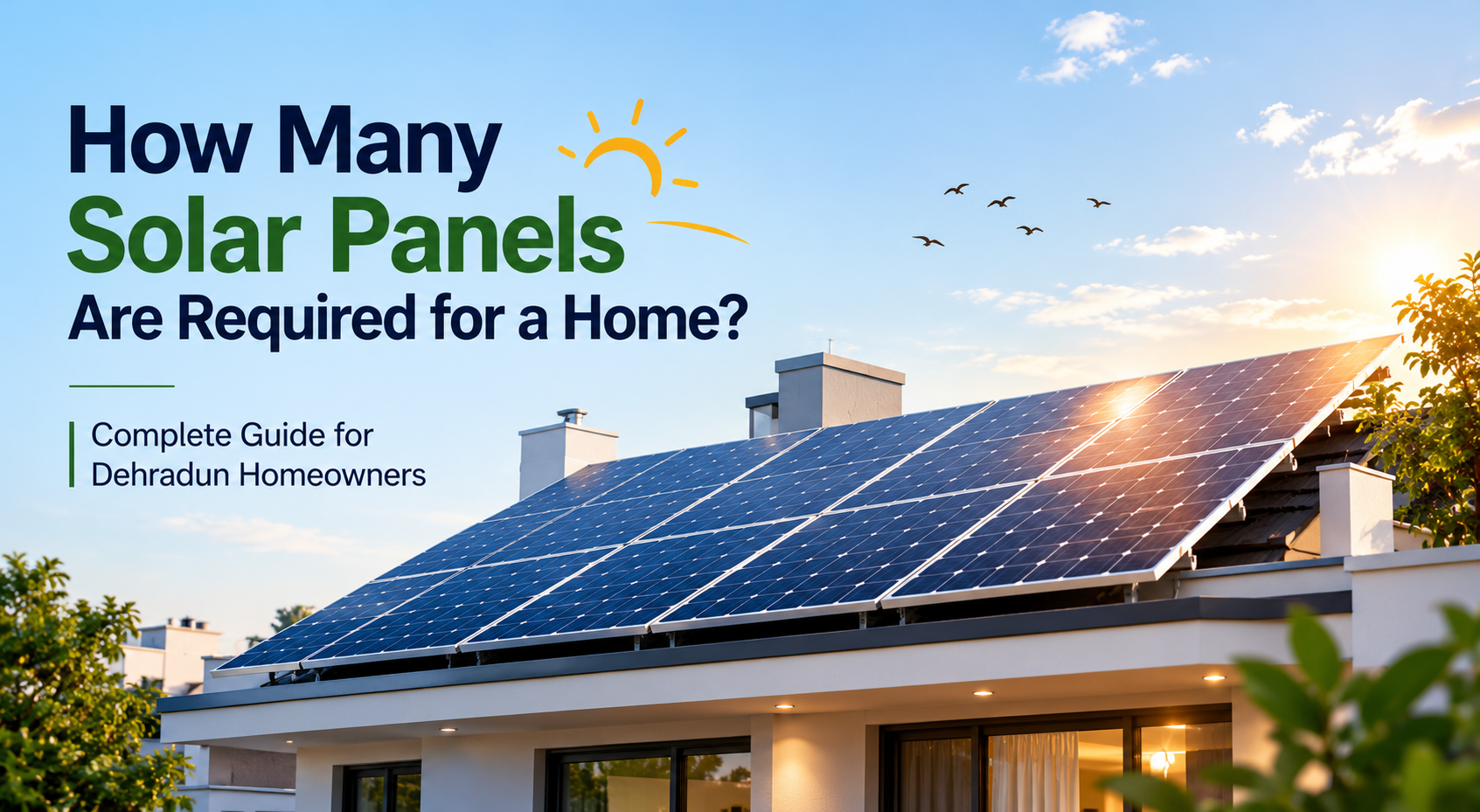
One of the first questions homeowners ask when considering rooftop solar is how many solar panels they actually need.
It’s a reasonable question, but the answer isn’t the same for every home.
The number of solar panels required depends on factors such as your monthly electricity consumption, available roof space, panel efficiency, and future energy requirements. A small family with modest electricity usage will need a very different system from a larger household running multiple air conditioners and high-power appliances.
Rather than focusing only on the number of panels, it is usually more helpful to start by understanding how much electricity your home consumes.
Why Your Electricity Bill Matters More Than Your Roof Size
Many homeowners assume solar system sizing starts with the rooftop.
In reality, the process begins with your electricity bill.
Your monthly electricity consumption provides the clearest picture of how much energy your solar system needs to generate.
A household consuming 200 units per month has very different requirements from a household consuming 700 units or more. The goal is not to fill every inch of rooftop space with solar panels. The goal is to install a system that matches your actual energy needs.
Once electricity usage is understood, the number of panels can be calculated much more accurately.
Modern Solar Panels Generate More Power Than Before
One reason solar installations have become more practical is that today’s solar panels are far more efficient than older models.
Modern residential systems often use high-capacity panels that generate significantly more electricity while occupying less roof space.
This means homeowners can install the same system size using fewer panels than would have been required a few years ago.
As technology continues to improve, rooftop space is becoming less of a limitation for many homes.
Understanding System Size and Panel Count
The number of panels required is directly linked to the size of the solar system being installed.
Smaller homes with lower electricity consumption may only require a few panels, while larger homes with higher energy demands naturally need more.
For many households in Dehradun, systems in the 3kW to 5kW range remain the most popular choices because they provide a good balance between electricity generation and installation cost.
The exact panel count varies depending on the wattage of the panels selected, which is why two homeowners installing systems of the same capacity may not always have the same number of panels on their roof.
Roof Space Still Plays an Important Role
Although electricity consumption determines system size, available roof space remains an important factor.
Solar panels need adequate sunlight exposure to perform efficiently, so panel placement matters just as much as the number of panels installed.
Factors such as water tanks, nearby buildings, trees, and roof design can all influence how a solar system is laid out.
A rooftop assessment helps identify the best arrangement for maximum electricity generation while making efficient use of available space.
Planning for Future Electricity Needs
One mistake some homeowners make is sizing a solar system only for their current electricity usage.
However, energy requirements often increase over time.
A family planning to install additional air conditioners, purchase an electric vehicle, set up a home office, or expand their household may benefit from considering those future needs during the design stage.
Planning ahead can sometimes be more cost-effective than expanding the system later.
Can Most Homes Support Solar Panels?
For the majority of residential properties, the answer is yes.
Modern solar systems can be installed on a wide range of roof types, including RCC roofs, terrace roofs, and metal sheet structures.
The key requirement is having sufficient sunlight exposure and adequate structural support.
Before any installation takes place, a site survey is usually performed to evaluate roof condition, shading, orientation, and available installation area.
This helps ensure the system will operate efficiently for many years.
How Much Electricity Can Those Panels Generate?
The number of panels is only one part of the equation.
What really matters is how much electricity those panels can produce.
A properly designed solar system should generate enough electricity to offset a significant portion of a household’s monthly consumption.
Actual generation depends on factors such as sunlight availability, weather conditions, roof orientation, panel efficiency, and maintenance.
This is why professional system design focuses on expected electricity production rather than simply counting panels.
Why There Isn’t a One-Size-Fits-All Answer
Many homeowners hope for a simple answer to the question of how many panels they need.
The reality is that every property is different.
Two homes may have the same roof size but completely different electricity consumption patterns. Likewise, two families with similar energy usage may require different system layouts because of roof design or shading conditions.
The best solar system is not necessarily the largest one or the one with the most panels.
It’s the system that aligns with your energy needs, available space, and long-term goals.
Is It Worth Installing More Panels Than You Currently Need?
In some situations, slightly oversizing a system can make sense, particularly if future electricity consumption is expected to increase.
However, the decision should be based on realistic expectations rather than simply adding more panels whenever space is available.
A balanced approach often delivers the best return on investment while keeping installation costs under control.
Frequently Asked Questions
How many solar panels does a typical home need?
The answer depends on electricity consumption and panel wattage. Many residential systems use anywhere from a few panels to more extensive installations depending on household energy requirements.
Do larger homes always need more solar panels?
Not necessarily. Electricity consumption matters more than the physical size of the house.
Can a small roof support a solar system?
In many cases, yes. Modern high-efficiency panels allow homeowners to generate more electricity while using less roof space.
What affects the number of panels required?
Electricity usage, roof size, sunlight availability, panel efficiency, and future energy needs all influence the final design.
Should I plan for future electricity consumption?
If you expect higher energy usage in the coming years, it may be worth considering that during the system design stage.
Leave a Reply