
For many homeowners in Dehradun, electricity bills have become a growing concern over the last few years.
Air conditioners run longer during summer, household appliances consume more power than ever before, and electricity tariffs rarely seem to move in the right direction. As a result, more families are beginning to look at rooftop solar as a practical way to reduce long-term energy costs.
What was once considered a premium upgrade is quickly becoming a common feature on residential properties across the city.
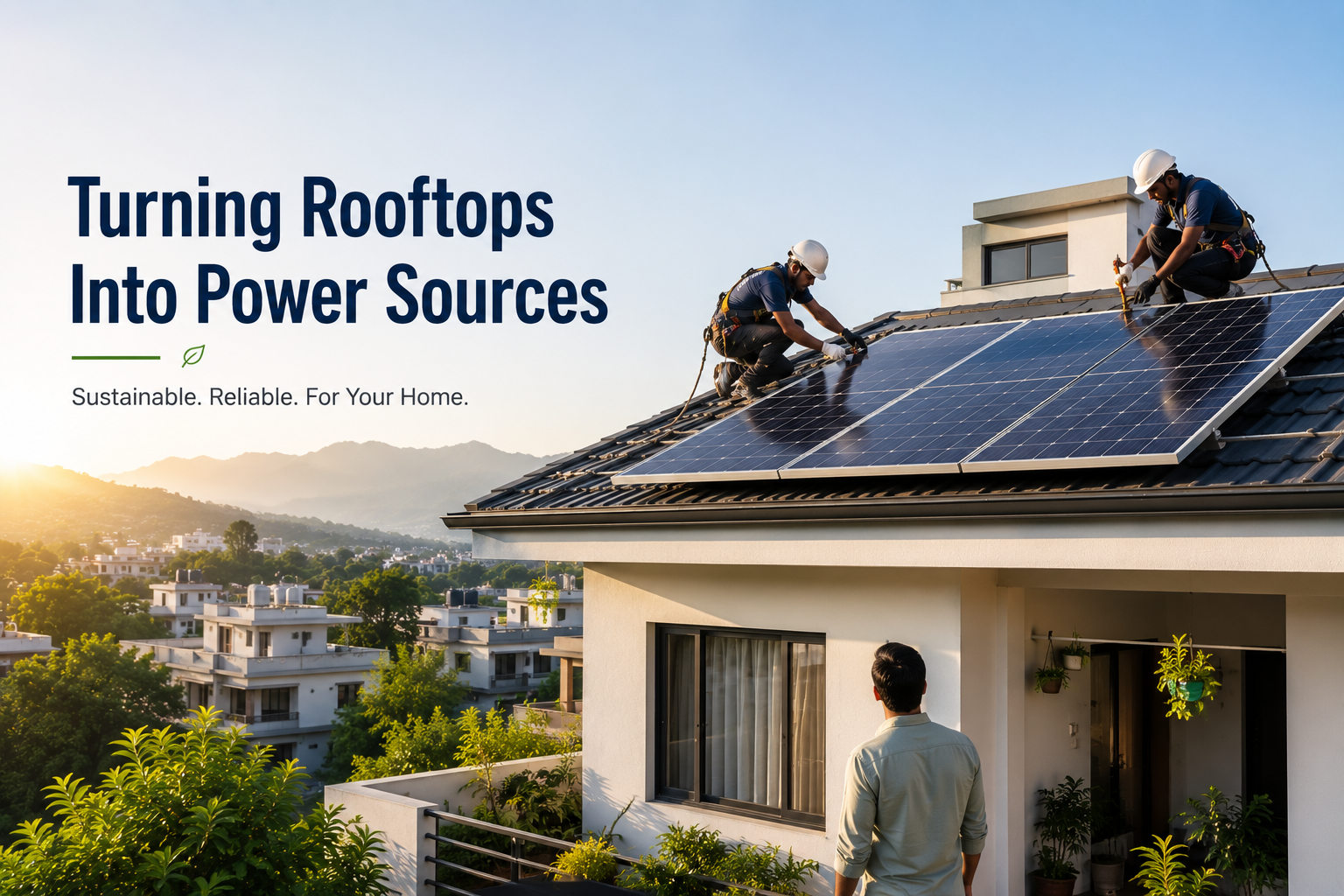
A residential solar installation allows homeowners to generate their own electricity directly from sunlight, turning unused rooftop space into a source of long-term savings.
Why More Homes in Dehradun Are Switching to Solar
The appeal of solar goes far beyond environmental benefits.
For most homeowners, the biggest motivation is simple: reducing monthly electricity expenses.
Unlike many home improvements that provide convenience or visual appeal, a solar system continues generating value every day sunlight is available.
With Dehradun receiving good sunlight throughout most of the year, rooftop solar systems can generate a significant amount of electricity over their lifespan.
This means homeowners can reduce their dependence on grid power while protecting themselves from future increases in electricity costs.
Understanding How a Residential Solar System Fits Into Everyday Life
One of the reasons solar has become so popular is that it works quietly in the background.
Once installed, the system automatically generates electricity during daylight hours. The electricity produced is used by the home first, helping power everything from lights and fans to refrigerators, televisions, and air conditioners.
Any excess electricity generated can be exported back to the grid through net metering, allowing homeowners to receive credits that help offset future electricity usage.
The entire process happens automatically, requiring very little involvement from the homeowner.
Choosing the Right System for Your Home
Not every house has the same energy requirements.
A small family living in a compact home will have very different electricity usage compared to a larger household running multiple air conditioners and high-power appliances.
This is why solar systems come in a variety of capacities.
Many average households find that a 3kW system meets their needs comfortably, while larger families often benefit from 5kW systems or higher.
The most effective way to determine the ideal size is by reviewing actual electricity consumption rather than making assumptions based solely on roof size.
A system that matches your usage patterns usually delivers the best long-term value.
The Importance of Roof Space and Sunlight
One concern many homeowners have is whether their rooftop is suitable for solar.
In reality, most independent houses have enough space for a residential installation.
Factors such as roof direction, available sunlight, shading from nearby buildings or trees, and overall structural condition influence system performance.
A professional site assessment can quickly determine how much electricity your rooftop can realistically generate and which installation layout will work best.
Looking Beyond the Installation Cost
Many homeowners focus primarily on the upfront investment.
While installation cost is certainly important, solar is best viewed as a long-term investment rather than a short-term purchase.
A properly designed rooftop solar system generates electricity for decades.
Over time, the electricity produced can offset thousands of units that would otherwise have been purchased from the grid.
For many households, the cumulative savings eventually exceed the original installation cost several times over.
This long-term perspective is one of the main reasons residential solar adoption continues to grow across Dehradun.
Why On-Grid Systems Remain the Most Popular Choice
Among residential properties, on-grid systems are by far the most common.
Because they remain connected to the electricity network, there is no need for expensive battery storage.
This helps keep installation costs lower while allowing homeowners to benefit from net metering.
Hybrid systems offer battery backup during power outages, while off-grid systems are generally used in locations where reliable grid access is unavailable.
For most urban homes, an on-grid setup provides the best balance between affordability and long-term savings.
How Government Subsidies Have Made Solar More Accessible
Government support programs have played a major role in accelerating rooftop solar adoption across India.
Schemes such as PM Surya Ghar Yojana help reduce the upfront investment required for residential installations.
For eligible homeowners, subsidy benefits can significantly improve the return on investment and make the transition to solar more affordable.
Combined with long-term electricity savings, these incentives have encouraged many families to consider solar sooner rather than later.
What the Installation Process Typically Looks Like
One of the biggest misconceptions about solar is that the installation process is complicated.
In reality, most residential projects follow a straightforward sequence.
The process usually begins with a rooftop assessment and review of electricity consumption. Once the appropriate system size has been identified, a customized design is prepared based on the property’s layout and energy requirements.
After installation, the system is tested, connected, and prepared for operation. If net metering is part of the project, the required procedures are completed before the system becomes fully operational.
From the homeowner’s perspective, the process is generally far simpler than most people expect.
Is Residential Solar Worth It?
For many homeowners in Dehradun, the answer is increasingly yes.
Electricity prices continue to rise, solar technology has become more reliable, and government incentives have helped reduce installation costs.
At the same time, modern solar panels are designed to operate efficiently for decades with relatively low maintenance requirements.
The exact savings depend on factors such as electricity consumption, roof conditions, system size, and sunlight availability, but the overall trend is clear: more homeowners are discovering that their rooftops can do far more than simply cover a house—they can generate long-term value.
Frequently Asked Questions
Is solar suitable for homes in Dehradun?
Yes. Dehradun receives good sunlight throughout most of the year, making rooftop solar systems effective for residential properties.
How long do solar panels last?
Most quality solar panels are designed to operate efficiently for 25 years or more.
Can a solar system run air conditioners?
Yes. A properly sized system can support air conditioners along with other household appliances.
Do residential solar systems require regular maintenance?
Very little. Periodic cleaning and occasional inspections are usually sufficient to maintain performance.
How do I know which solar system size is right for my home?
Your monthly electricity consumption is usually the best indicator when selecting the ideal system size.
Leave a Reply